
Start a Lathrop Resident Search
Match the record to the question first. A parcel entry proves a legal owner or a tax mailing destination, not who sleeps at the address. A deed names parties to a transfer, and a court docket assigns a party role. A directory or newspaper can pin a household to an earlier date. Label the result before treating it as a lead.
Stockton is the county seat. Durable Lathrop evidence often sits outside the city. The city holds permits, planning files, council records, and its own public-record request route. The county keeps the recorder, assessor, clerk, tax, and court trails, while California adds vital records, voter status, licenses, custody, and archives. Start narrow. Widen only when the trail ends.
- Write down the name, address, date span, and spelling exactly as known. Keep compound surnames, maiden names, initials, and suffixes.
- Use San Joaquin GIS or the Assessor address tools to turn a street clue into an APN and situs address.
- Check the Recorder Grantor/Grantee index, court case search, or LCAP based on the question, and note each person’s role.
- Use the library, obituary index, census schedules, and regional directories when the question reaches into the past.
- Ask the custodian for a counter view, copy, mail request, or focused CPRA search when the online index stops.
The strongest result is a dated chain of named sources. It says what turned up, where, and what remains unproved.
Where Lathrop Resident Records Live
The central county desk is the San Joaquin County Assessor-Recorder-County Clerk in Stockton. The Recorder indexes instruments. The Assessor maintains parcel and assessment data. The County Clerk handles series such as marriage licenses and fictitious business names. The Superior Court keeps case files. Lathrop's City Clerk and City Attorney route city-held records. Cesar Chavez Central Library holds the strongest local-history and genealogy shelf.
These offices are not interchangeable. A tax mailing address is not an occupancy roll, a court party is not automatically a resident, and a library obituary lead is not a certified death record. Treat the office cards as starting points, then follow the access rule for the record itself.
San Joaquin Recorder
44 N. San Joaquin Street, Suite 260
Stockton, CA 95202
(209) 468-3939
San Joaquin Assessor
44 N. San Joaquin Street, Suite 230
Stockton, CA 95202
(209) 468-2630
San Joaquin Superior Court
Stockton case and records services
Public index and view room
Records guidance online
San Joaquin Deeds Behind Lathrop Names
The Recorder lists 168 document types. Its records date back to 1851. The online Grantor/Grantee index covers January 1, 1968 through the present, while earlier paper waits on film in Stockton. A grantor conveys or encumbers an interest. A grantee receives or benefits from it, so search both roles when a former owner resurfaces as the next seller.
Treat the index as a finding aid, not the legal instrument. An entry shows the parties, recording number, recording date, book and page when applicable, and document type, while the image or certified copy carries the legal description and the terms. Redactions may appear under California law. Military discharge records face special limits.
| Recorder field | What to enter | Why it helps |
|---|---|---|
| Grantor or grantee | Choose one role, then repeat in the other | Finds each side of a transfer |
| Last or business name | Indexed spelling and entity name | Preserves the filed form |
| Recording dates | Beginning and ending range | Narrows common names |
| Document type | Deed, release, lien, map, decree, or other type | Separates ownership from encumbrance |
| Document number or book/page | Known citation | Retrieves a direct hit |
For resident-directory work, a deed shows a party's link to land at one recorded moment. That is evidence, not residency proof. Pair it with a parcel, permit, obituary, or other independent record.
Lathrop Parcel Clues from the Assessor
San Joaquin's property information system is the tool for turning a street clue into a parcel. Search by APN or situs address. Use map selection when an address will not normalize. California law keeps owner names out of the internet property roll. Ownership details come through the public counter, a terminal, the phone route, or an available copy and data process.
The labels are not the same thing. An APN is an assessor parcel identifier, and it can change after a split or merge. A situs address labels the physical property. A mailing address is the tax or contact destination. The legal description in a deed is the durable land identity. No single label establishes every current occupant.
- Roll
- An assessment record for parcels, values, characteristics, and ownership information held by the Assessor.
- Index
- A searchable finding aid that points to a fuller deed, case, map, or other record.
- Criss-cross directory
- An address-ordered volume that can point from a street to a listed subscriber for a publication year.
- APN
- The Assessor’s parcel identifier used to join a map, tax record, and deed research trail.
- Situs address
- The county’s physical property address, which can differ from a tax mailing address.
- Parcel
- A mapped unit of land, not a list of everyone who lives within it.
The July 2024 fee sheet posts small charges for screen copies. It also covers building-record copies and parcel maps. Larger charges apply to certain characteristics and data products. Fees change. Confirm the current schedule with the Assessor before ordering.
GIS adds map context. Address and APN tools, an identify control, parcel layers, and boundaries are available. Optional thematic layers reveal adjacent lots. The map is a bridge to the parcel. It is not a substitute for the custodian's ownership record.
The San Joaquin Assessor property-information gateway opens a Lathrop parcel search. The page also shows why an online address lead ends at a counter.
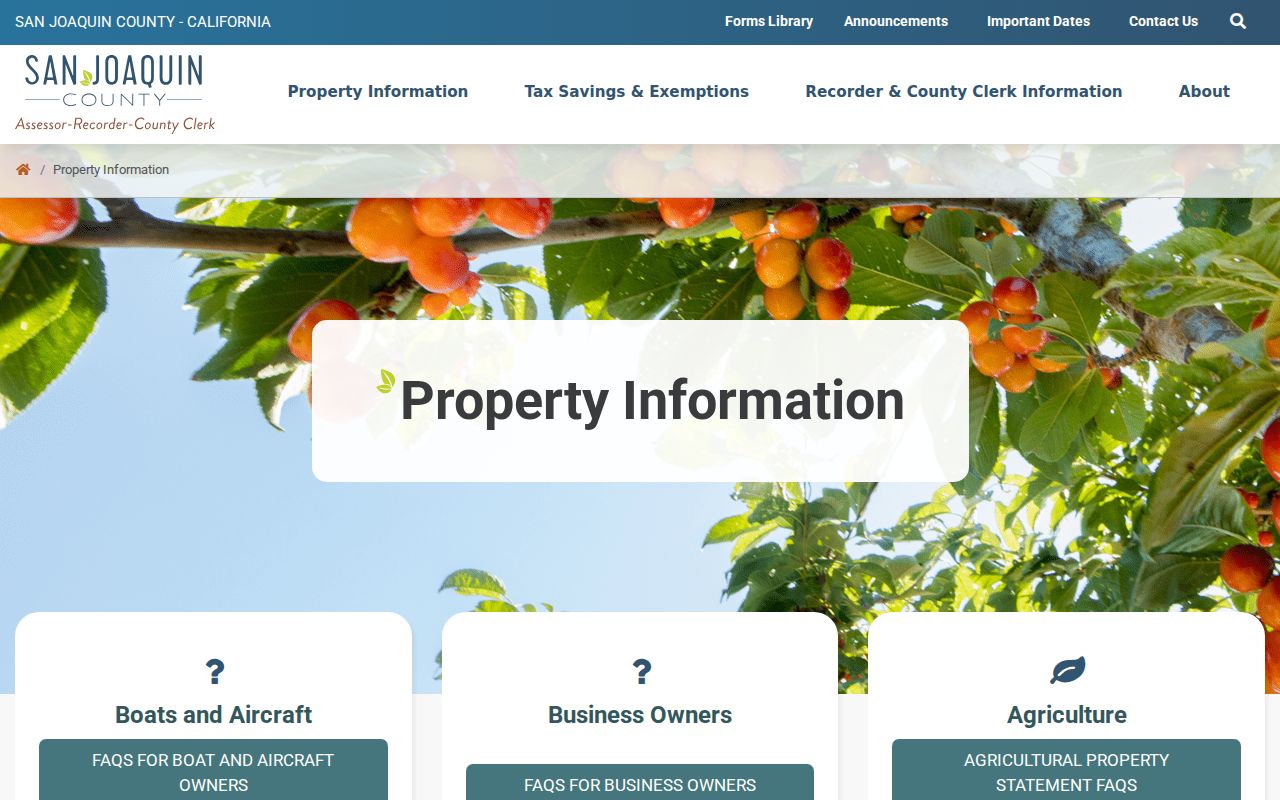
Let the returned parcel and address steer the next Recorder visit or a focused records request. A map match alone is never a household claim.
Lathrop Permits Since May 7, 1997
Lathrop keeps its building permits, business licenses, planning applications, payments, and inspection records in one place. That home is the Civic Access Portal, known as LCAP. Its permit history reaches back to May 7, 1997. Search an address. The portal may return a project description, inspection history, a status, and a link to an applicant, owner, or contractor. That link speaks to work done at the address. It is not proof that anyone lives there.
Try the public search before filing a CPRA request. Plans and full permit histories do not download freely through the guidance page. For defined records, ask the City Attorney through the online form, email, or postal mail. Government Code section 7922.535 gives the city ten days for an initial determination. Production can take longer, and the city says as much itself.
| Address or location | Use the street number and street name when the address route is available. |
|---|---|
| Record or permit number | Enter a known number to narrow the result. |
| Record type | Choose a building permit, business license, planning, or application category when exposed. |
| Date or status | Use the filter when the public screen makes it available. |
| Search and reset | Run the query, then clear it before testing a second address. |
The Lathrop Civic Access Portal landing page opens the city's gateway. From there, a permit trail can add dates and project context to a Lathrop residents directory search.
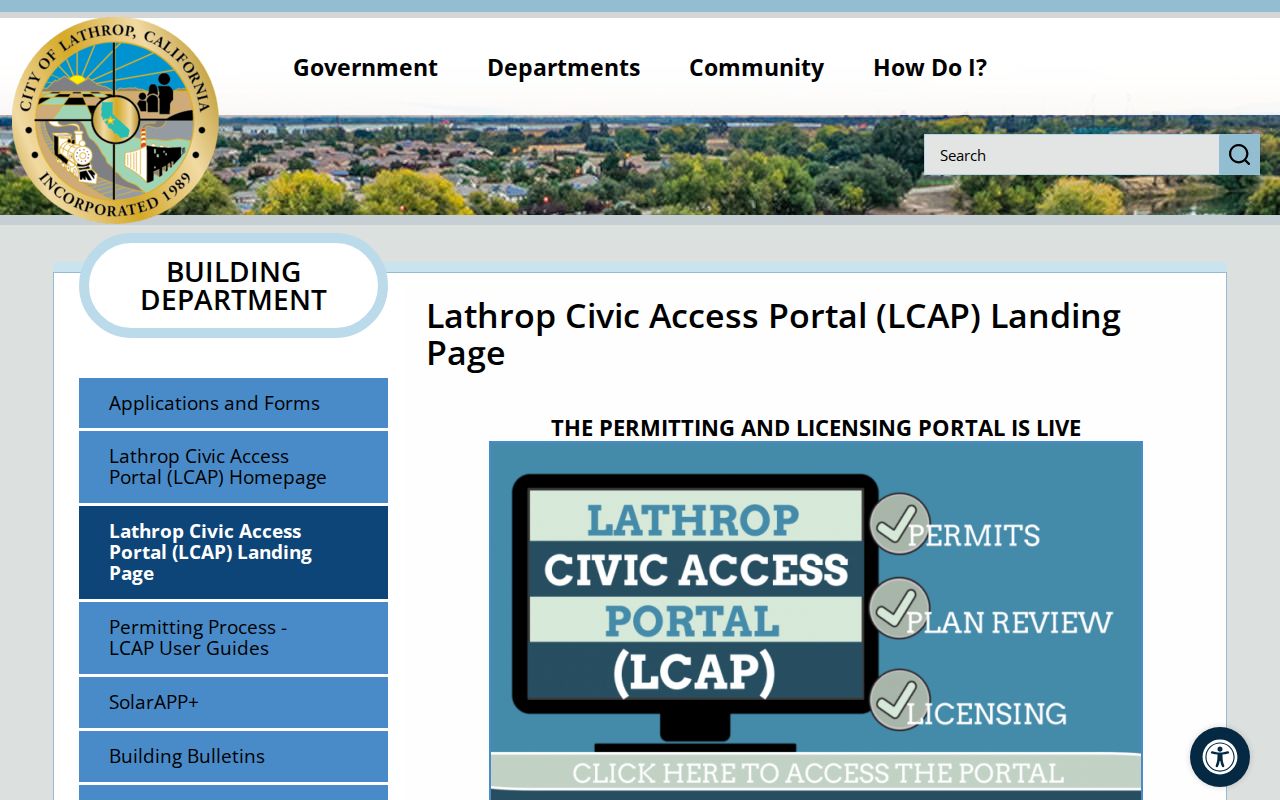
A CPRA request works best when it names a specific plan, inspection record, or date range. Keep it narrow. Asking the city to build a list it never kept tends to slow things down.
Today's Lathrop Resident Directory Sources
Building a current Lathrop resident directory means comparing record types, not stacking them. Each row answers its own question. Several are not public lists at all. Keeping an owner, a registrant, a court party, a city permit participant, and a historical name apart prevents one unsupported identity from forming.
| Source | Who or what it shows | Keeper | Access |
|---|---|---|---|
| Parcel and assessment roll | APN, situs, mailing and property facts | San Joaquin Assessor | Web parcel clues, counter, phone |
| Grantor/Grantee index | Parties to recorded deeds and liens | San Joaquin Recorder | Web index, counter, copy request |
| LCAP permit history | Applicants, contractors, projects, inspections | City of Lathrop | Online from May 7, 1997 |
| Case Management Search | Public party and docket events | San Joaquin Superior Court | Free index, file by kiosk or request |
| Business and license profiles | Entity, agent, credential, or public contact | California and county offices | Public portals, role limits apply |
| Library and newspaper collections | Past households, notices, obituaries | SSJCPL and regional archives | Microfilm, books, index, staff help |
Voter status is not a public roster row. California's My Voter Status tool lets a person check that person's own registration, ballot, polling place, and districts. Elections Code section 2194 and related regulations restrict the election file. The California My Voter Status tool is not a street or ZIP code directory. It should never be used as one.
California Voter Lookup Is Personal
The voter-status form asks for a first name, a last name, and a date of birth. It also asks for a driver license or identification number. The last four digits of a Social Security number can serve when needed. Those fields verify one registrant privately. Nothing about them creates an open neighborhood roster. The sensitive fields never appear in an authorized public extract.
For a Lathrop resident lookup, the tool covers one person only. Check the person whose registration is being checked. Otherwise, turn to the San Joaquin Registrar of Voters with an authorized election, scholarly, journalistic, political, or governmental purpose. A governmental purpose qualifies as well. A name on a deed, license, or court docket is not voter confirmation. Stop the inference there. It feels tempting but never holds up.
California's Safe at Home program adds another wrinkle. A protected participant may use a substitute mailing address and confidential voter registration. A missing name or address can reflect a safety program. It may not be an empty record trail. The San Joaquin Registrar of Voters explains the county election channel. It is the right office for questions about an authorized records purpose. It is no shortcut to a public residents directory.
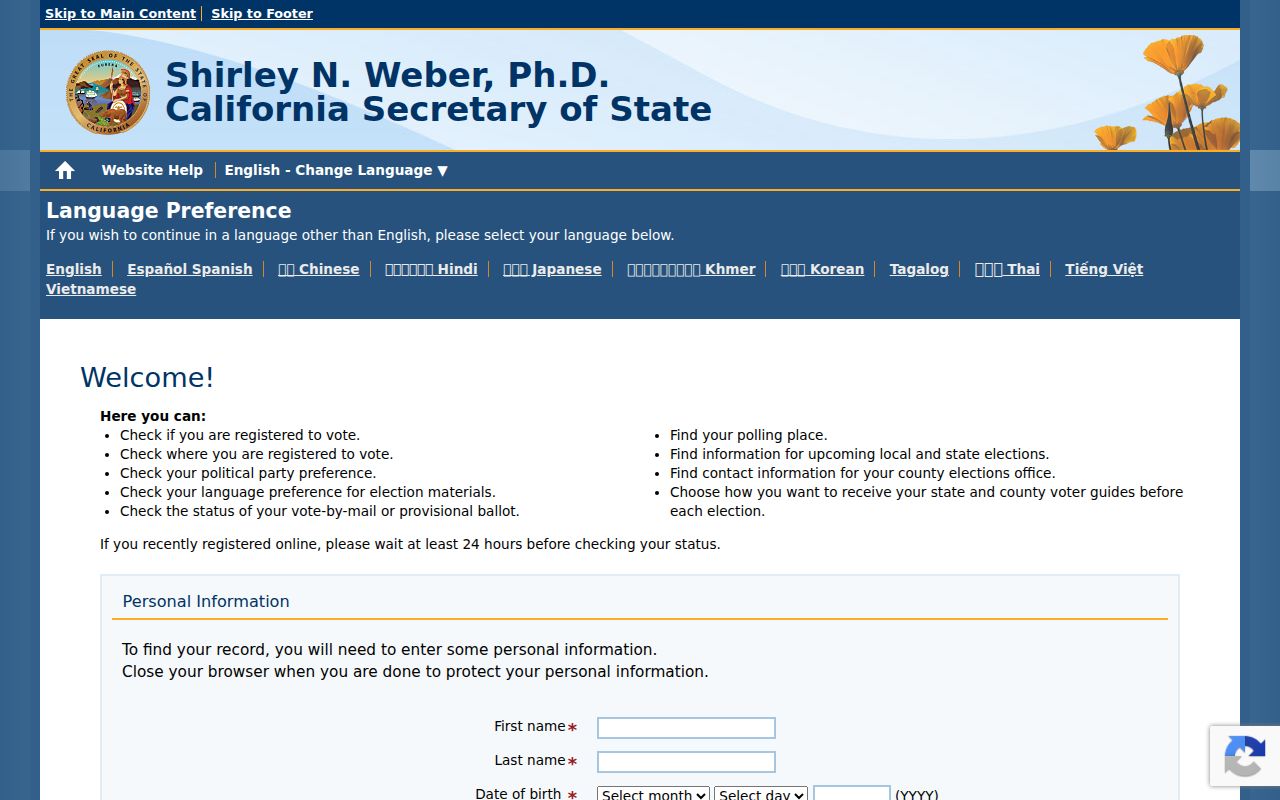
The personal verification fields explain the split. A private status check and a public resident search must stay separate.
San Joaquin Court Names and Roles
San Joaquin Superior Court's Case Management Search opens public docket information for civil, criminal, family, probate, small claims, traffic, and other categories the portal exposes. Start with a case number if you have one. Name mode requires separate entries for first, middle, and last name combinations, plus tests of spelling variants and a middle initial. California Rule of Court 2.507 bars date of birth and driver-license data from remote public party searching.
A docket records a court's events. It may carry a party name and role, case number, division, filing date, hearing dates, register-of-actions entries, and a public disposition or status. The full file it is not. Sealed cases, juvenile matters, confidential adoption material, protected victim information, and other confidential records stay out of any public result.
- Use the free San Joaquin Case Management Search for the first index check.
- Use Stockton’s second-floor view room kiosk for public file viewing by appointment or walk-in.
- Use Records Management when a file, certified copy, or uncertified copy is needed.
- Use the CR-109 mail form for a copy request that has the case number and advance payment.
Records Management asks online requesters for a case number and a valid email. Staff generally respond within 24 to 48 hours to arrange viewing. Mail-copy requests run about 20 business days depending on volume. Copies do not go out by email. Copy fees and certification fees apply, with a separate amount for a certified divorce judgment.
A court party is a litigation role, nothing more. It does not establish that a person lives in Lathrop. It does not establish that an allegation is true. Weigh the case type, date, courthouse, counsel, and linked filing before tying it to a resident. The court search interface is the public starting point. Its page displays one official court trail for a Lathrop name.
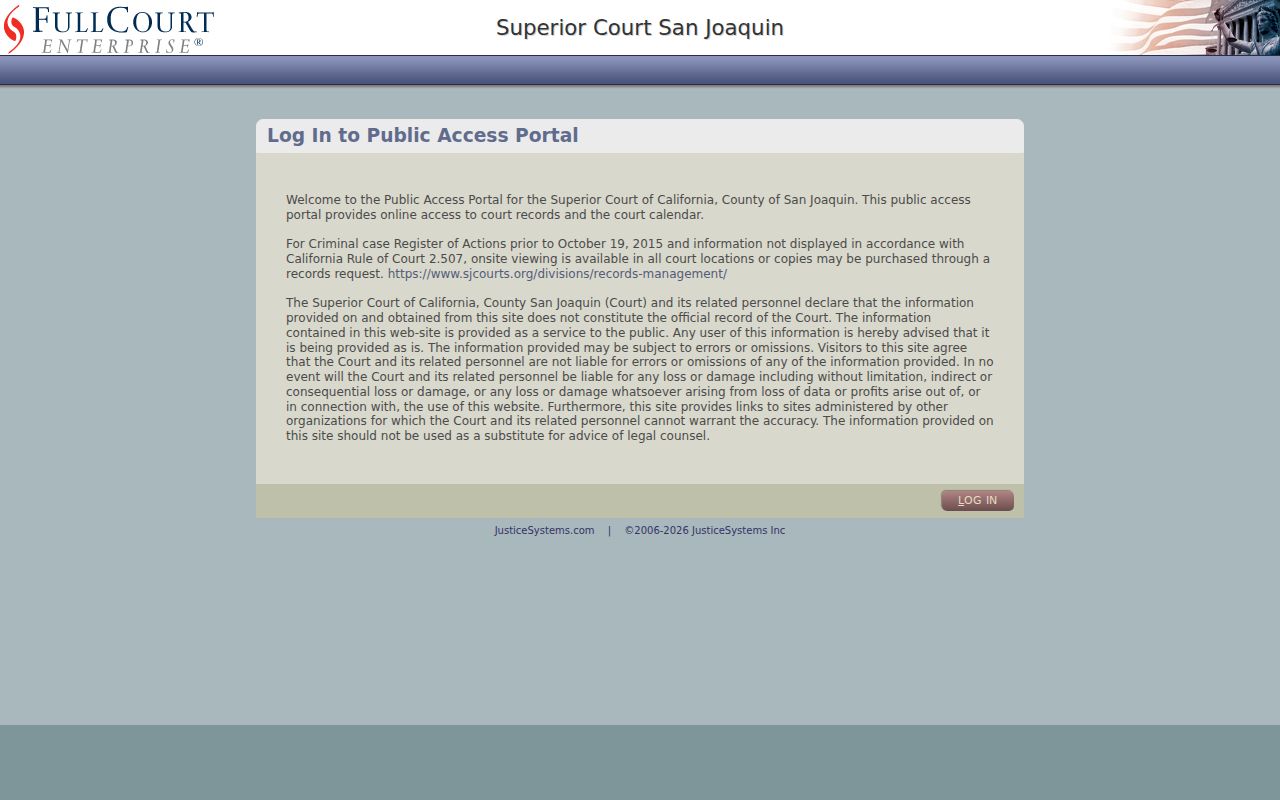
When the index hands you a case number, take it straight to Records Management. A search result is never the complete record.
Lathrop Birth Death and Marriage Records
California splits vital copies into authorized and informational versions. San Joaquin County’s Recorder-County Clerk runs the local birth, death, and marriage channels for Lathrop. The state health department offers a second route plus divorce verifications. Only listed eligible people can get an authorized certified copy, sometimes with a sworn statement. Anyone may order an informational copy, which carries a legend and proves less.
Confidential marriage records sit behind a tighter Family Code section 509 rule. A public birth, death, or marriage index may sit on a library shelf. It can point you to an event. The custodian still controls the application, identity proof, copy type, and current fee. Adoption information follows its own separate state pathway.
| Birth | San Joaquin Recorder or CDPH; copy eligibility depends on authorized or informational status. |
|---|---|
| Death | County or CDPH; a library death index can lead to the record but is not the certificate. |
| Public marriage | County Clerk or CDPH channels, with access depending on applicant and record type. |
| Confidential marriage | Generally limited to a spouse or court order through the county clerk of issuance. |
| Divorce | Superior Court holds the file and judgment; CDPH supplies limited verification. |
The California Vital Records page links to the state ordering route and the copy-choice forms.
For family history, start with the event date and place. Then request whichever copy the law allows the requester to receive from the county or state.
Stockton Library Sources for Lathrop Families
Cesar Chavez Central Library in Stockton is the main regional shelf for Lathrop family research. Its upper-level reference collection includes more than 1,500 genealogy books, about 200 family histories, 125 periodicals, and San Joaquin vital and cemetery compilations. Much of it is noncirculating and must be used in the building. Family History Helpers meet on the first and last Tuesday from 10:30 a.m. to 1 p.m.
Newspaper microfilm is especially useful. The library holds Stockton-area papers since 1850, described as “just about” all issues, but the subject index is incomplete. A researcher can view, print, email, or save an image to USB. HeritageHub and Ancestry Library Edition add databases, with Ancestry access limited to the library. The local obituary index covers 1850 through 1991.
The SSJCPL genealogy collection and the Chavez local-history room offer a human route when an online name search misses a year. The San Joaquin Genealogical Society accepts requests at research@sjgensoc.org and charges $5 to locate a county obituary. Give a date window, surname, place, and likely newspaper so the volunteer can test the right shelf.
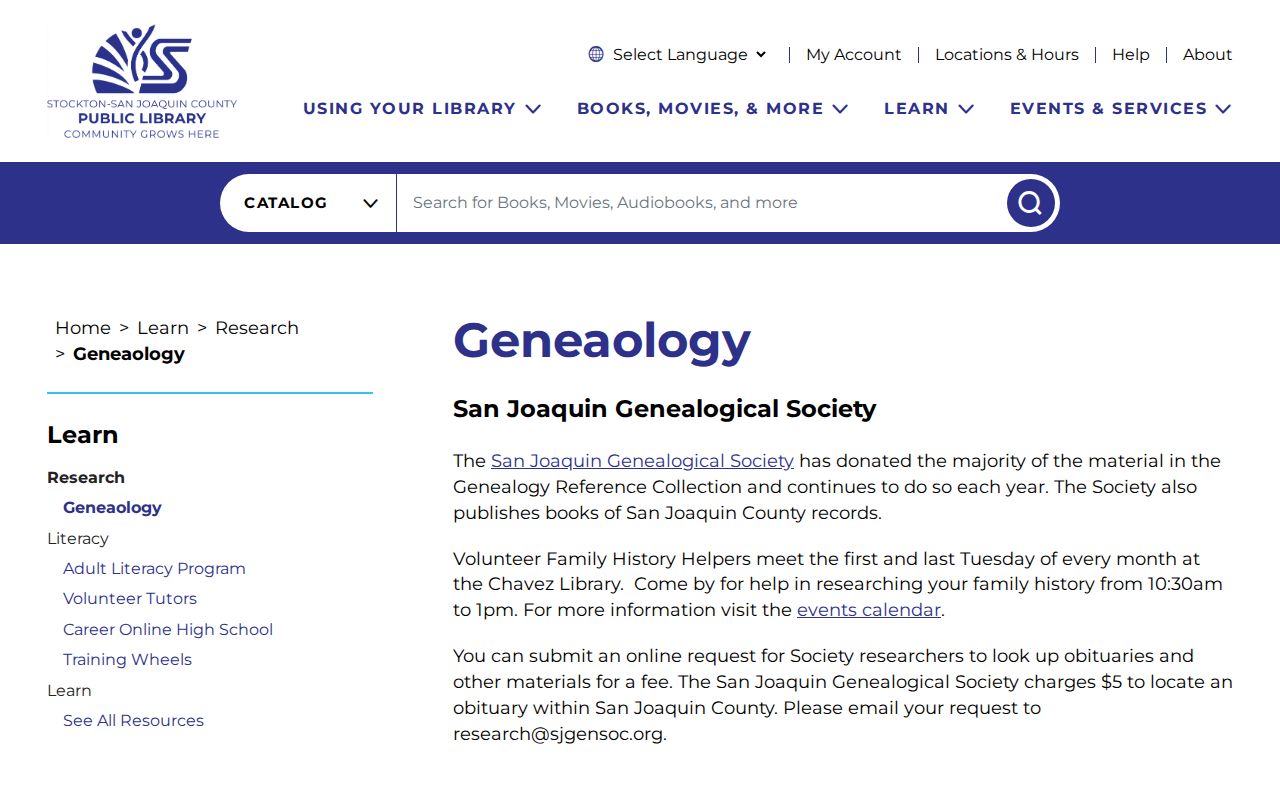
This library path can tie a former Lathrop household to an obituary, family history item, or school notice without treating every printed name as a current resident.
San Joaquin Custody Searches Are Separate
Some official searches cover custody or registration status, not ordinary residents directory work. The San Joaquin County Sheriff’s Who’s in Custody tool checks county jail holdings. The state corrections locator handles prison records only. Megan’s Law runs its own public-safety search with its own warning. A custody result can change. A charge stays an allegation until adjudicated. Statutory use limits also apply.
Match the tool to the question. Use the county jail search for present local custody. Use the CDCR locator for a prison number. Use the state registry only for its stated public-safety purpose. Keeping these scopes apart stops a temporary custody hit from spreading. It should never become a claim about someone’s home or family. The San Joaquin Who’s in Custody search is the county channel.
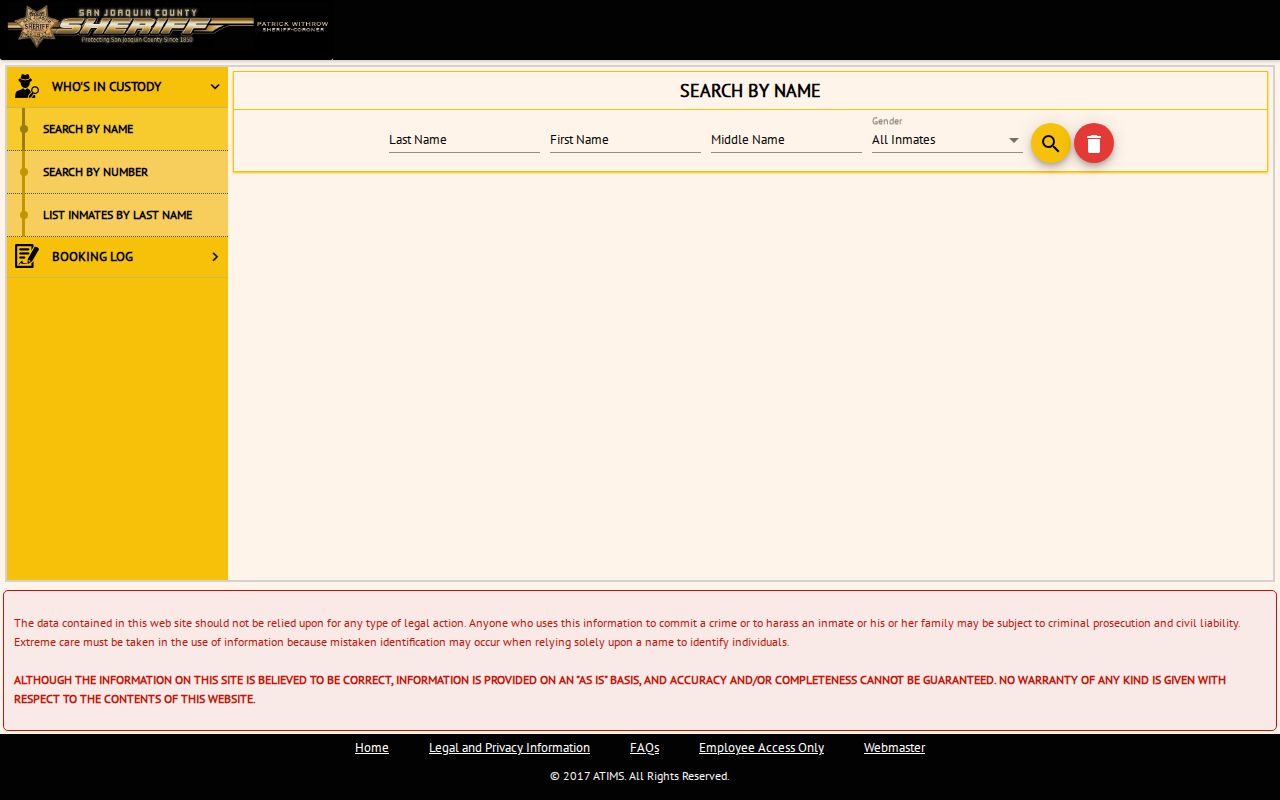
Read the scope and disclaimer on any official result before saving a name. A custody lookup is not a general resident roll.
Lathrop Business and License Trails
Business and professional records can explain a public role. They can also reveal a filed address or a company tie. California bizfile Online searches entity names and numbers. It shows status, formation jurisdiction, agents, addresses, Statements of Information, and filing history. The Department of Consumer Affairs search works by board, license type, license number, business or personal name, city, county, or ZIP. Contractor, attorney, and real-estate licenses each have their own portals.
LCAP keeps Lathrop city business-license and application records. The County Clerk files fictitious business names. An agent for service of process is not necessarily an owner or resident. A license contact may just be a mailing address. Record the role exactly. Then chase a parcel, court, obituary, or family source if the question is really about a person. The California bizfile Online search is one official starting point for a Lathrop business lead.
Business filings add context to a Lathrop residents directory, but they are not a household list.
When Lathrop Records Need a Counter
Online access is one channel in the Lathrop records map, not the whole thing. The Assessor's owner-name restriction makes the counter or public terminal essential. Recorder images and certified copies follow a fee schedule. Court files may require the Stockton view room. They may also need a case number, an emailed or mailed form, advance payment, and a wait. Library material may be noncirculating. City plans may need a focused CPRA request. A complete resident lookup names these fallbacks instead of promising every answer online.
| Need | Online start | Fallback channel |
|---|---|---|
| Parcel and owner clue | Assessor property information or GIS | Assessor counter, terminal, phone, or copy request |
| Deed or lien | Recorder Grantor/Grantee index | Recorder counter, image, certified copy, or mail request |
| City permit or plan | LCAP from May 7, 1997 | Lathrop CPRA web, email, or postal request |
| Court file | Case Management Search | Stockton kiosk, Records Management, or CR-109 |
| Old family clue | Library catalog or obituary index | Chavez room, microfilm, volunteer, or archive appointment |
Official records and commercial people-finder pages also differ in what they prove. The comparison is about source quality, not a pitch for any named service.
| Source category | Strength | Limit |
|---|---|---|
| Government record | Named custodian, defined series, dates, and legal access rule | May omit occupants, be restricted, or require a fee |
| Library or archive | Older context, local help, newspapers, books, and directories | Coverage can be incomplete and in-person |
| Commercial people-finder category | May join public and purchased data in one interface | Source dates and role labels can be unclear; verify at the custodian |
For a serious Lathrop question, let the official source have the last word. The Recorder office page is a safer place to confirm the official copy route than any mailed solicitation.
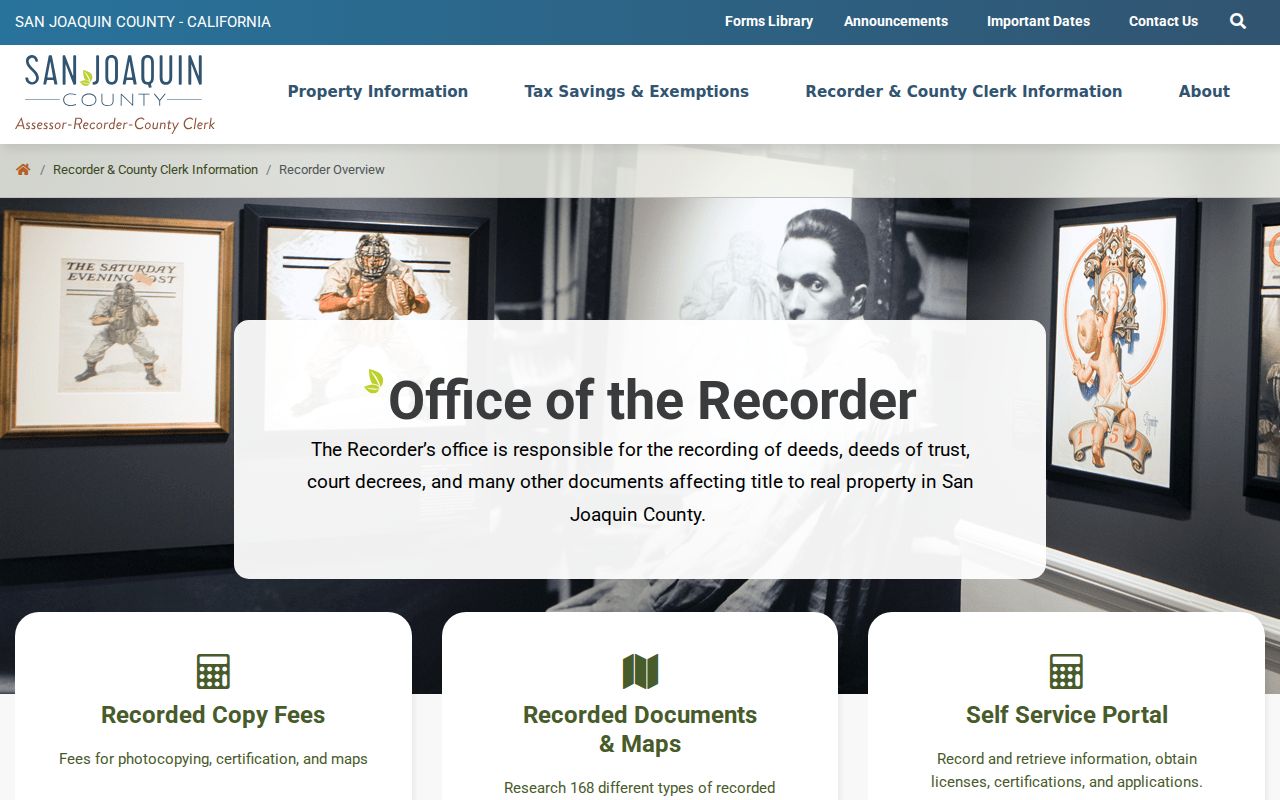
A county counter is not a failure of the Lathrop residents directory. It is part of the documented access path. Some Lathrop records simply live at a window, and the directory exists to point you there.
Older Lathrop Directory Collections
Historical Lathrop resident directories follow regional patterns rather than tidy city-only volumes. The San Joaquin Historical Museum holds city and county directories spanning 1852 through 1980, though gaps exist and access requires an appointment. The library's local-history policy covers city directories, county directories, telephone books, and yearbooks alike. Ask the staff to search several catalog terms. Lathrop, Stockton, San Joaquin County, Manteca, rural-route, railroad, and postal headings all may surface different shelf holdings.
Digitized material helps too. An 1878 D. H. Berdine statistical directory covering the county and Stockton is available through the Internet Archive and includes Lathrop entries. Haines North San Joaquin Valley criss-cross volumes run from roughly 1932 onward, with a 2010 copy held in the SSJCPL Ripon reference collection. Lathrop coverage inside those volumes still needs shelf verification. A criss-cross directory flips the lookup. Instead of person-to-address, you search address-to-listed subscriber.
The fuller historical-shelf treatment sits on the Lathrop city directories page. For a current address chain, start with parcel and deed records, then test a directory year to see whether a named household appears at that address.
Lathrop’s 1989 Records Boundary
Lathrop's incorporation after the 1989 election creates a real catalog boundary. Requesting records under "City of Lathrop" can miss earlier material filed elsewhere. Before incorporation, documents may sit under unincorporated San Joaquin County. Other material may sit under Wilson's Station, a railroad or postal term, a school, a church, or a newspaper. The town began with Central Pacific construction. It became a rail stop by 1871. It counted about 600 residents by 1879. A major fire in 1911 and later industry shaped the local story. No destroyed records series is documented, however.
Geography complicates the lookup further. The city's 1990 planning area stretched west to the San Joaquin River. It reached north to Roth Road. A January 1991 expansion added nearly 5,000 acres of the Stewart Tract west of the river. Terms like River Islands, Mossdale, Central Lathrop, and the older rail corridor can point to different record custodians. They can also point to different dates. The 2020 census counted 28,701 residents. Newer growth is better traced through parcel records, permits, newspapers, and city files. It is not well traced through the last public 1950 census schedules.
California's 2026 DROP platform adds a privacy option. It gives consumers a state route for requests aimed at registered data brokers. It does not delete deeds, court files, or other source-government records. The most careful Lathrop residents directory workflow keeps history, current parcel evidence, personal verification, and privacy limits in separate lanes.