
Lathrop City Directory Coverage
San Joaquin County has a documented directory shelf, but it is not a verified, continuous Lathrop-only run. The strongest local evidence is split between Stockton-San Joaquin County library holdings, the San Joaquin Historical Museum, and one digitized 1878 volume. The library collection policy confirms county-city directories, telephone books, and yearbooks, while the catalog and staff must still establish which physical volumes include Lathrop.
Use the table as a starting map, not as proof that every year survives. The museum describes an aggregate run, and its gaps are not listed. The Haines title is regional. The 1878 scan is a real Lathrop source, but it is a statistical county directory rather than a modern street-by-street book.
| Collection | Years | Where Held | Access |
|---|---|---|---|
| San Joaquin city and county directories | 1852-1980 aggregate; gaps not listed | San Joaquin Historical Museum, Gerald D. Kennedy Reference Library | Appointment-only, noncirculating; verify volume and Lathrop coverage |
| D. H. Berdine statistical county and Stockton directory | 1878 | Internet Archive UC scan | Free online scan; Lathrop entries appear in county tables |
| Haines criss-cross, North San Joaquin Valley, city and suburban | Serial beginning about 1932; 2010 holding confirmed | SSJCPL Ripon reference holding | In person; confirm that the requested year includes Lathrop |
| County-city directories, telephone books, and yearbooks | Individual years not published | SSJCPL Cesar Chavez Central Library collections | Noncirculating or in-library use; catalog and staff verification |
| Stockton-area newspaper microfilm | Since 1850; “just about all” issues | Chavez Central Library Local History Collection | View, print, email, or save images to USB |
No authoritative source located an exhaustive Lathrop city directory year list or a complete publisher list. Search the library catalog for Lathrop (Calif.) - Directories, San Joaquin County (Calif.) - Directories, Stockton (Calif.) - Directories, telephone directories, and Polk or criss-cross terms. Then ask staff to check shelf years, neighboring place names, rural-route listings, and whether a volume's address section actually reaches Lathrop.
Why Lathrop Appears in Regional City Directories
Lathrop was not a large incorporated city for most of the printed-directory era. It began as Wilson's Station, took the Lathrop name around 1870 during Central Pacific construction, and was a rail stop by 1871. The official history reports about 600 residents by 1879, a major fire in 1911, and incorporation after the 1989 election. A volume may therefore place a Lathrop person in a county, railroad, postal, rural-route, or nearby-city section rather than use Lathrop in its title.
That catalog history changes the search order. A failed title search for “Lathrop city directory” does not settle the question. Stockton and San Joaquin County headings, Manteca-area references, telephone books, school or church material, and newspaper notices can hold the same household under a different geographic label.
| 1850 | San Joaquin County was organized; Stockton became the county seat and records center. |
|---|---|
| 1851 | The Recorder's documented instrument history begins, giving land research an early county trail. |
| Around 1870-1871 | Wilson's Station took the Lathrop name and became a Central Pacific rail stop. |
| 1879 | Official local history reports about 600 residents, useful context for why county tables matter. |
| 1911 | A major fire became part of the town's record history and may explain abrupt address or business changes. |
| 1989 | Lathrop incorporated after an election; earlier “city” searches can miss county-held records. |
Note: For a pre-1989 household, ask for county, postal, school, railroad, church, and newspaper records before assuming a municipal Lathrop file exists.
Chavez Library's Lathrop City Directory Shelf
Cesar Chavez Central Library in Stockton is the region's strongest documented local-history stop. Its second-floor Local History Collection is noncirculating and centers on Stockton and San Joaquin County. The upper-level genealogy reference collection holds more than 1,500 books, 200 family histories, 125 periodicals, and San Joaquin vital and cemetery compilations. The collection policy also confirms county-city directories, telephone directories, and yearbooks for San Joaquin County cities and towns.
Bring a name, an approximate year, a street variant, and any nearby place label. Staff can confirm whether a Lathrop entry sits in a county directory, telephone volume, or reverse directory. Ancestry Library Edition is in-library only. HeritageHub provides obituary access. Family History Helpers meet on the first and last Tuesday from 10:30 a.m. to 1 p.m., giving a practical in-person research channel when a shelf or index is hard to read.
The library's Stockton newspaper microfilm is especially useful beside a city directory. The library says issues have appeared since 1850 and that it holds “just about all” of them. Images can be viewed, printed, emailed, or saved to USB. The subject index is incomplete, so a date window around a move, death, deed, or civic event can be more useful than a single name search.
Library staff can also point to the SSJCPL genealogy collection and its catalog terms. Those terms matter because a Lathrop listing may sit in a San Joaquin County title without a Lathrop title word.
The Chavez Central Library local-history page shows why the physical room matters for Lathrop family research.
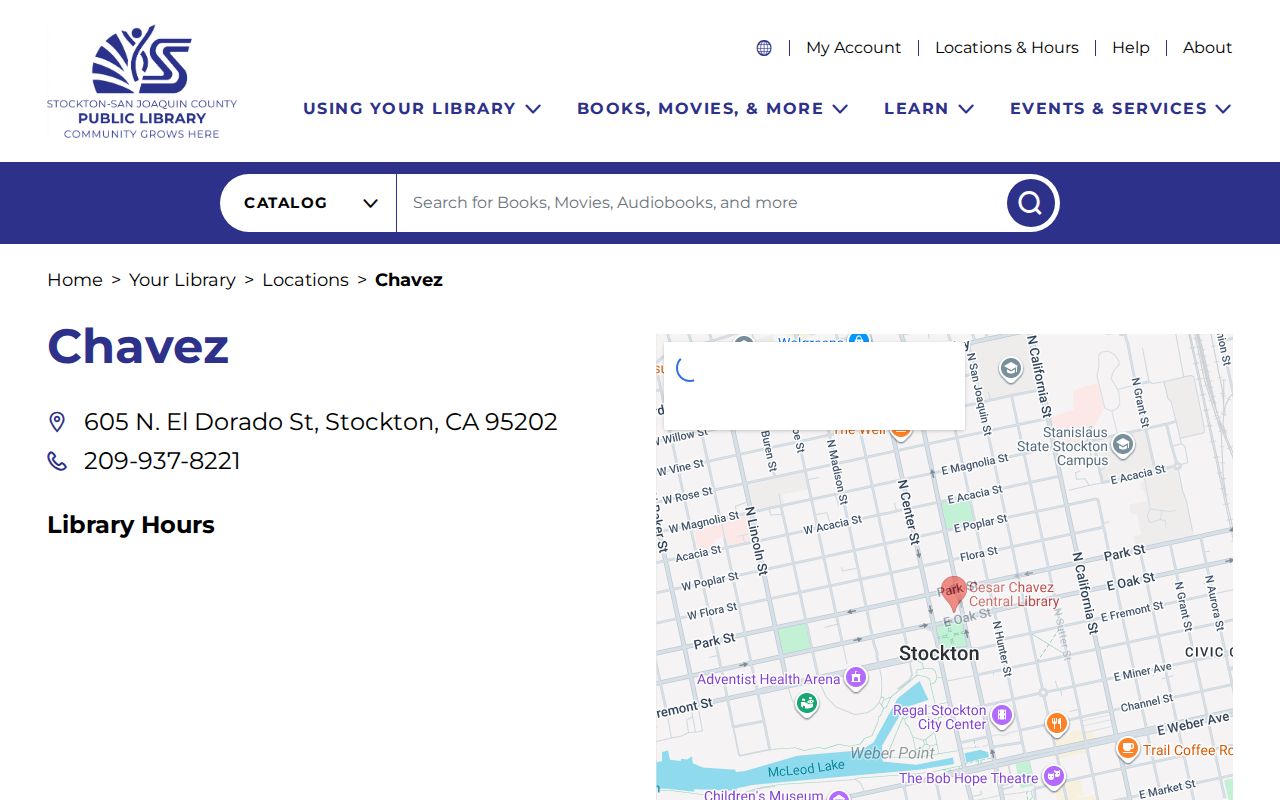
The noncirculating rule means a directory visit should be planned as a reading session. Photograph or transcribe the title page, publisher, year, page, and abbreviation key before moving through entries.
Lathrop Records: Newspapers and Obituaries
A city directory entry is often a lead, not a complete household story. The SSJCPL and online obituary index covers 1850-1991 and is based on index cards held at the library. Search the card index, then locate the underlying notice or request help finding it. The index may give a death date and newspaper clue without providing every family detail.
When a name is common, search variant spellings, initials, married names, and nearby dates. The library's incomplete newspaper subject index makes manual browsing worthwhile. A San Joaquin Genealogical Society volunteer can perform a county obituary lookup by email at research@sjgensoc.org for $5. Treat the lookup as a research service and the notice as the source to inspect.
Newspaper pages can explain a directory gap. A departure, marriage, death, court matter, civic appointment, or move may appear near the last address entry. A silence does not prove that a household left; it may reflect an unlisted telephone, a missed canvass, a rural delivery route, or a different adult listed in the next volume.
Note: An obituary index identifies a notice lead, while the notice itself supplies the names, relationships, dates, and places that can test a directory match.
Test the 1878 Lathrop Directory Scan
The verified early online sample is D. H. Berdine's 1878 Statistical County Directory of San Joaquin County ... Also Embracing a Directory of the City of Stockton. The Internet Archive item is a UC-scanned volume, and the broader regional directory search provides a useful place to test related scans. The county section is an alphabetical resident and property table. Lathrop appears as a locality or post-office value beside personal names.
Read the scan image, not only the OCR. Optical text can collapse the table's road, district, and numeric land-style columns. Copy the printed name, locality, page, and nearby headings. A 1878 Lathrop entry proves that the person was listed in that directory's county context. It does not prove current residence, continuous ownership, or a full household.
The digitized volume makes a good comparison point for later shelves. A later city directory may use an alphabetical name section, an address section, or both. A regional title can be more useful than a Lathrop-only title when the town was small or when postal geography changed.
The digitized regional directory search gives a broader view of the online material available for inspection.
The scan is a source to read and cite. It is not a substitute for checking the archive or library shelf for a better image, a missing page, or a later local volume.
San Joaquin Museum's Lathrop Directory Archives
The San Joaquin Historical Museum archives hold the broadest verified local directory span: aggregate San Joaquin city and county directories from 1852-1980. The archive page does not list every gap or publisher, so the range must not be described as a continuous Lathrop run. The Gerald D. Kennedy Reference Library is noncirculating and research is appointment-only.
The same regional archive includes maps, voter registers, assessment and plat books, infrastructure and planning surveys, and community material. Those companions can help test a directory address when a name entry is thin. Remote research lasting more than 45 minutes is listed at $25 per hour prepaid, plus reproduction, service, and postage costs. Ask for the exact title, date, publisher, call number, and Lathrop inclusion before paying for a search.
The museum archive page places the directory shelf beside the maps and community records that can add context to a Lathrop entry.

A useful shelf request names several catalog paths at once: Lathrop, Stockton, San Joaquin County, telephone directories, and Haines. Record both a positive result and a “not located” result. The latter is valuable when the same address is later tested against deeds, newspapers, or census schedules.
Federal Records Around Lathrop Directories
The National Archives at San Francisco supplies a federal context for local city directories. Its regional holdings include federal census, court, immigration, naturalization, and military records. The latest public federal decennial census is 1950 under the 72-year rule; the 1960 census is due for public release in 2032. A directory snapshot and a census schedule answer different questions, but they can test whether a household was present at roughly the same time.
The California State Archives collections and library catalog channels are additional paths for government series, county deeds, probate, marriage, and church material. Image access can vary by collection and may require a free account or an affiliate library. These channels do not create a guaranteed Lathrop city directory run. They are fallback paths when the regional shelf identifies a person or place but leaves a gap.
The National Archives regional page represents the federal record path that can anchor a Lathrop directory entry to a census or other historical record.
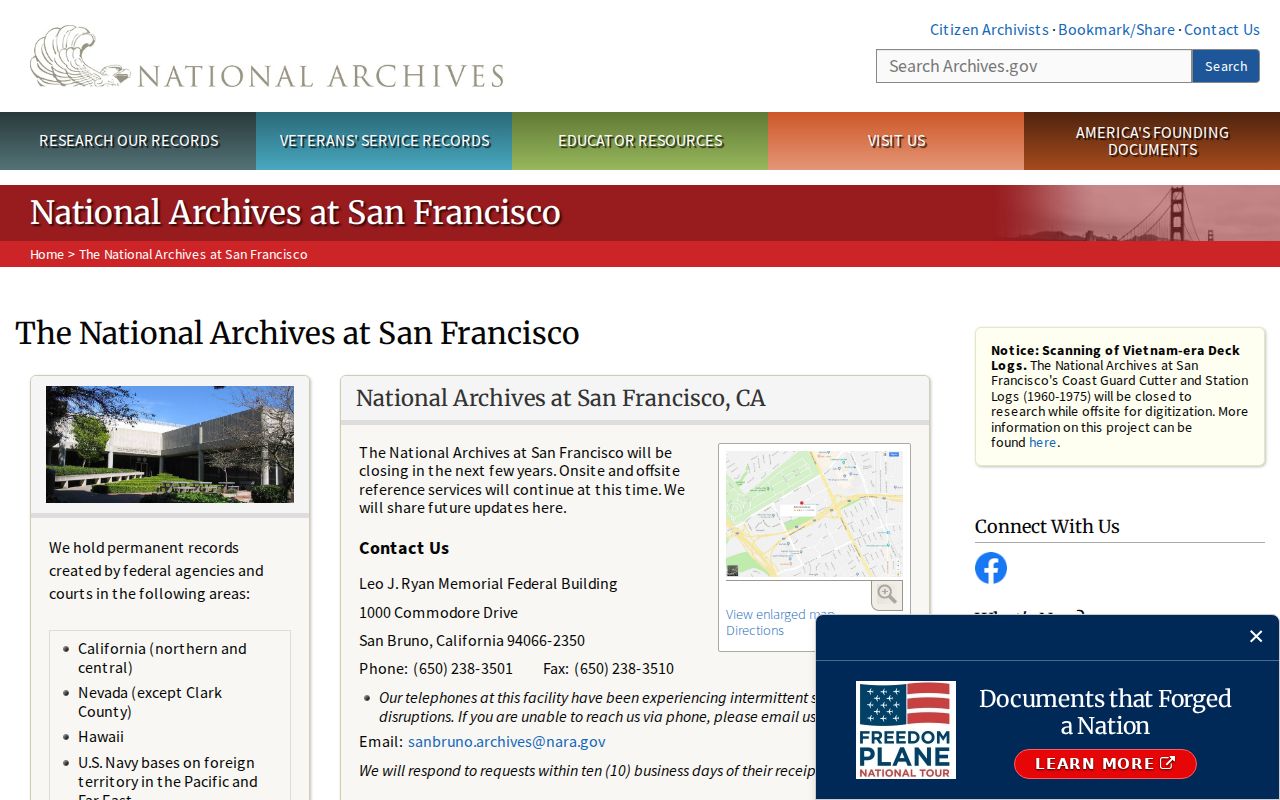
Keep the evidence labels separate: a census lists a household on an enumeration date, a deed identifies a party to a property instrument, and a directory lists people under that publication's rules.
Reading a Lathrop City Directory Entry
The entry format depends on the publisher and year. A later regional volume may show a surname, given name or initial, spouse in parentheses, widow notation, occupation, residence or business address, and a householder, renter, or telephone mark when the book defines one. The 1878 Berdine table is different: it uses an alphabetical county format with locality and property context.
Transcribe the page before interpreting it. A printed “r” can mean residence or resides, while “bds” can mean boards. A householder mark is a publication clue, not a legal ownership record. A business address is not automatically a home address. The volume's own abbreviation page controls.
| Name and variant | Copy the printed spelling, initials, suffix, and any cross-reference exactly. |
|---|---|
| Spouse or widow notation | Parentheses or “wid” marks can provide a family-history lead; confirm it elsewhere. |
| Occupation | Record the historical line as printed, without treating it as proof of identity or present status. |
| Residence and business address | Separate the two when both appear, and preserve house number, street, unit, and locality. |
| Owner, renter, or telephone mark | Use only when that volume defines the symbol; it does not by itself establish title or occupancy. |
| Year, page, and section | Keep publication year, page, column, alphabetical section, and reverse-section details with the transcription. |
- Criss-cross directory
- An address-oriented section that reverses the name-first order, usually listing a street and number before a listed occupant or subscriber.
- Householder index
- A name-first listing centered on household heads or principal entries; the exact scope changes by publisher and year.
- Abbreviation key
- The volume's legend for short marks such as residence, boards, widow, or cross-reference. Find it before reading a full page.
Note: A city directory records what a publisher gathered for one edition; it is not a complete list of every person living at an address.
Use Lathrop City Directories for Family History
Start with the nearest known person or address, then move through the available years instead of assuming a single match is final. Copy the entry verbatim, preserve its page and section, and note the first and last appearance. A household can shift from a name-first section to a reverse section, or from Lathrop to a county or rural-route label.
- Choose the closest verified directory year for the known name, address, or locality.
- Transcribe the entry, abbreviation key, page, publisher, and publication year.
- Check the next available year and record each address change, spouse mark, or “see” reference.
- Read the reverse section for other names listed at the same address, then compare the 1940 and 1950 public census schedules.
- Use newspapers, the obituary index, probate, cemetery compilations, or deeds to explain a first appearance, last appearance, or change.
Disappearance has several possible meanings. The person may have moved, died, changed a surname, missed the canvass, lost a telephone listing, or appeared under another adult. A directory's rural coverage and annexation history can also alter the place label. Record the uncertainty rather than turning absence into a claim.
When a historical entry needs a present-day parcel check, the address-keyed work belongs in the Lathrop street directory workflow. That keeps a historical listing separate from a current parcel, deed, or owner record.