
What a Lathrop Resident Lookup Can Confirm
A useful resident lookup starts by choosing the record that can answer the narrow question. San Joaquin County, the City of Lathrop, California departments, the courts, and regional libraries each keep a different evidence type. The table uses “confirms” carefully. It describes the record’s own subject, not a broader conclusion about where a person currently lives.
| Record | What it confirms | Where | Access |
|---|---|---|---|
| Assessor parcel or tax roll | Ownership, mailing destination, parcel link | San Joaquin Assessor | Address clues online; owner route by counter or terminal |
| Recorder deed index | Name at a recorded transfer, role, date, legal property link | San Joaquin Recorder | Grantor/Grantee index, copy, counter |
| LCAP permit | Applicant, owner, contractor, project and inspection association | City of Lathrop | Online from May 7, 1997; plans by request |
| Court docket or file | Party role, case dates, filings, status or disposition | San Joaquin Superior Court | Free index; kiosk, mail, counter, or Records Management |
| Vital record or index | Birth, death, marriage, family or event place and date | County, CDPH, library | Copy type and eligibility control access |
| License or business filing | Credential, entity role, agent, public contact, filing address | California DCA, SOS, County Clerk | Free public portals, role limits apply |
| Unclaimed-property record | Reported name, city, or prior address lead | California Controller | Free search; proof needed to claim |
Start with the record that matches the purpose. A name search for an heir may move to probate and deeds. A family-history search may move to an obituary and library newspaper. A court question may require the case number before a file request can proceed.
Build a One-Person Lathrop Evidence Table
One name can represent several people. Build a small evidence table before drawing a conclusion. Keep the source, date, role, place, and exact spelling in separate columns. An address from a court filing may be old. A business address may not be a home. A license may show a public contact point. These limits are normal in a Lathrop resident lookup.
| Name form | Filed surname, first name, middle initial, compound surname, maiden name, or suffix. |
|---|---|
| Role | Owner, grantor, grantee, party, applicant, contractor, licensee, agent, decedent, or heir. |
| Place | Situs address, mailing city, courthouse, business address, event place, or census place. |
| Date | Recording, filing, permit, case, event, license, publication, or search date. |
| Custodian | The office or library that can verify, correct, certify, or supply the underlying record. |
Do not use a matching name as the join key by itself. A shared surname, a common first name, or an initial can make an unrelated court party appear to be the person sought. A second source should match a date, place, relative, parcel, employer or public role only when that detail is stated by the source and fits the purpose.
Avoid Same-Name Lathrop Mix-Ups
San Joaquin records can index exactly what a filer supplied. Preserve compound surnames, both paternal and maternal surnames, maiden names, generational suffixes, and initials. Search the person’s name in more than one order when a portal allows it. Test a narrow date range. Compare the courthouse or county office, not just the text of the name.
A same-name trap is easiest to spot when the roles conflict. One record may show a grantee in a Lathrop deed. Another may show a party in a Stockton case. A business filing may show an agent for service of process. None should be merged unless the address, time, family link, or other stated fact supports the connection.
- Copy the name as printed and write down every variant found.
- Anchor the person to a place or date before adding a second record.
- Check the role in the record, such as party, owner, licensee, or decedent.
- Use the custodian’s file or certified copy when the index is not enough.
- Mark the identity as unresolved when the sources conflict rather than forcing a match.
This approach keeps a resident lookup useful for genealogy, reconnection, estate research, and civic questions without turning uncertainty into a personal claim.
Search San Joaquin Court Names
The Superior Court Case Management Search is the first court step for Lathrop names. Case-number mode takes an exact number. Name mode uses separate first, middle, and last fields, and the court advises searching combinations separately. Case type or category and filing date range can narrow common names. Remote party search does not expose date of birth or driver-license data under California Rule of Court 2.507.
| Search field | Type | Required | Use |
|---|---|---|---|
| Case number | Text | Required in case mode | Exact court number where known |
| Party name | First, middle, last text fields | Required in name mode | Run variants and middle-initial combinations |
| Date of birth or driver data | Not available | Not applicable | Protected from remote public party search |
| Case type | Selector | Optional | Availability varies by module |
| Filing date range | Date pair | Optional | Narrows common names |
A docket result can show party name and role, case number, courthouse or division, category, register-of-actions events, filing and hearing dates, and a public status or disposition. The online result is not necessarily the full file. Sealed, juvenile, confidential adoption, protected-victim, and other protected material is absent.
The San Joaquin Case Management Search is the official index. The image below belongs to the court step of a Lathrop resident lookup.
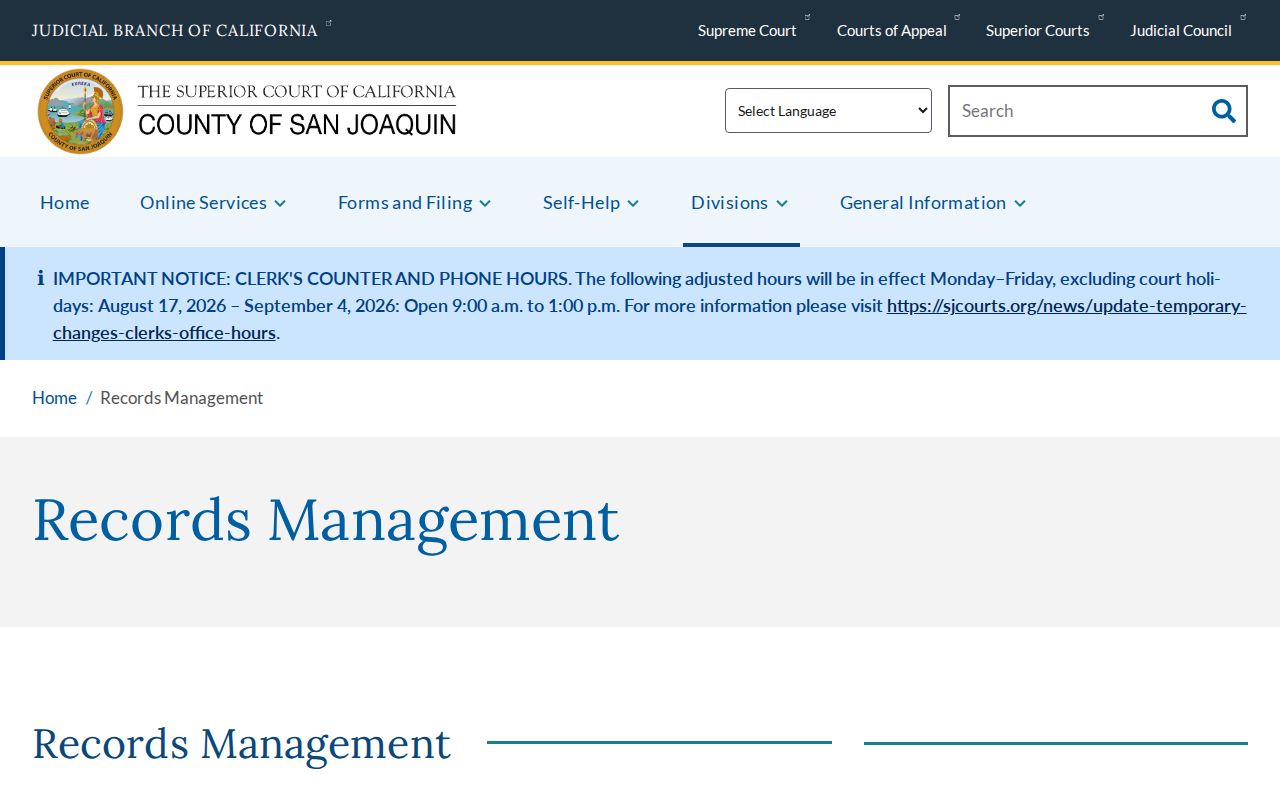
When the index gives a case number, take it to Records Management. Online requests need the case number and a valid email. Staff generally contact requesters within 24 to 48 hours to arrange viewing. Stockton’s second-floor view room supports appointment or walk-in public viewing. Mail-copy requests can take about 20 business days and require the court form, with fees paid in advance. No copies are sent by email.
Read a Lathrop Lookup Result
Index and image are different evidence levels. A docket or deed index is a searchable description. An image is the underlying document, subject to redaction and copy rules. A certified copy is a custodian-attested reproduction used when an agency or legal process requires that form.
- Docket
- A court’s running list of case events, filings, hearings, and status entries.
- Index
- A finding aid with searchable names, dates, roles, numbers, or document types.
- Image
- A scan or copy of the underlying record, which may require a fee or request.
- Certified copy
- A copy authenticated by the custodian rather than a plain search printout.
- Disposition
- The recorded outcome or status of a case event when publicly shown.
For a name lookup, write down the fields the result actually contains. The court may provide party role and docket dates. A deed may provide recording number and parties. A vital index may provide an event lead. The absence of a field does not prove the event never occurred.
Find a Lathrop Owner Lawfully
The Assessor is helpful when a person’s name needs to be tied to a parcel, but the internet property system does not publish owner names. Start with address, APN, GIS, or legal-description clues. Then use the public counter, terminal, phone, or county copy and data process. The owner is not necessarily the resident, and a tax mailing destination is not a household roster.
The Recorder supplies the next check. Search the Grantor/Grantee index by name, role, recording date, and document type. Deeds, deeds of trust, releases, liens, maps, and decrees answer different questions. A Lathrop resident lookup should say “party to a recorded transaction” unless the record supports a more precise statement.
The San Joaquin property-information gateway and the Recorder retrieval guidance provide the two county starts. A counter visit or copy request is part of the documented route, not a sign that the search failed.
Choose a California Vital Copy
Birth, death, marriage, and divorce records need a record-type decision before a request is sent. San Joaquin County can issue local certificates through the Recorder-County Clerk. CDPH provides statewide certificates and divorce verifications. Historical library indexes and genealogy compilations can point to an event, but they do not replace the application or eligibility check.
| Authorized certified copy | Limited to listed eligible applicants and may require identity proof or a sworn statement. |
|---|---|
| Informational copy | May be available more broadly, carries a legend, and is not the same certified proof. |
| Confidential marriage | Generally limited to a spouse or court order under Family Code section 509. |
| Divorce | Superior Court holds the file and judgment; CDPH offers a limited verification route. |
Use the California vital-record forms for the current application path. A lookup can identify the right record without establishing that a requester is eligible for the copy.
Separate California Search Scopes
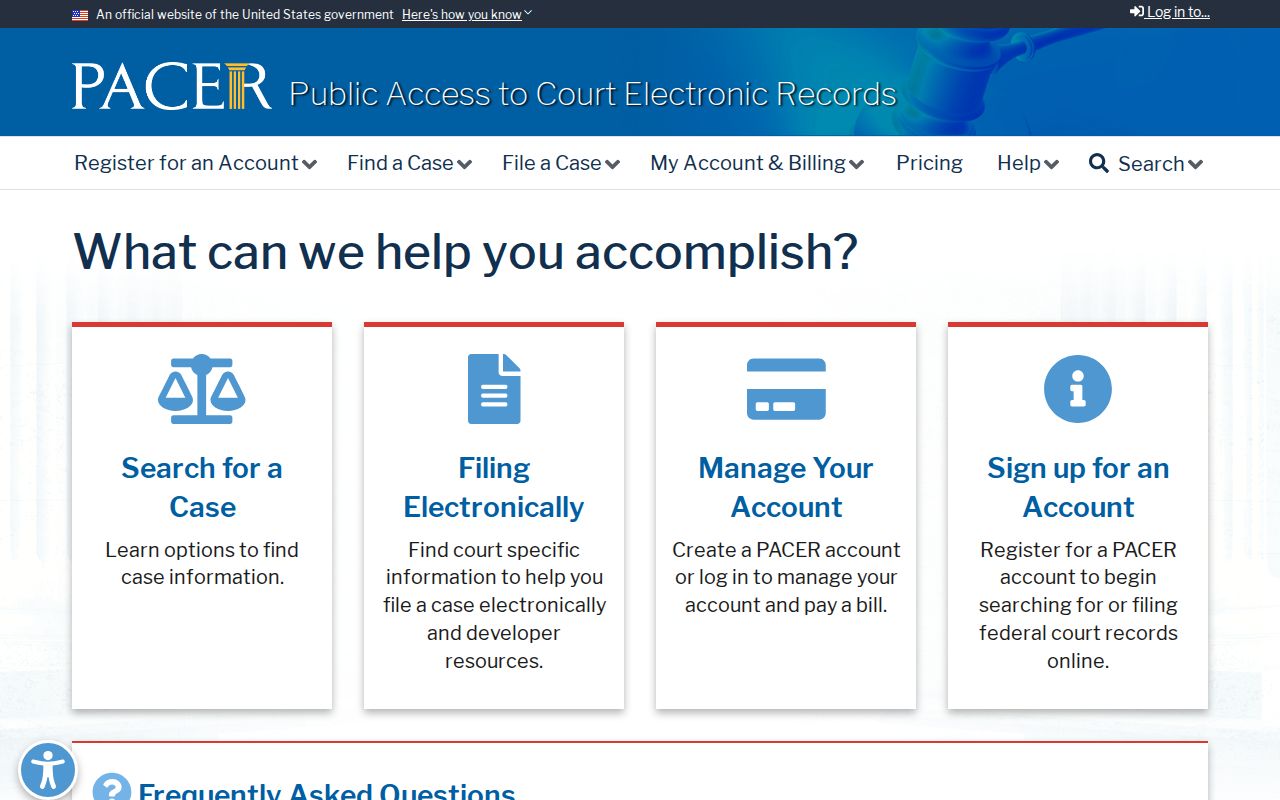
Some official tools answer a narrow state or federal question. The California Department of Justice record-review route lets an individual request that person’s official state criminal-history review through fingerprints. It is not a public name directory. PACER locates federal civil, criminal, and bankruptcy cases, but federal documents can be metered and sealed material is omitted. California Megan’s Law provides its own public-safety registry and warning.
County custody is separate from state prison custody. The San Joaquin Who’s in Custody search covers the county jail. CDCR covers state prison. A result can change, and an allegation or registry entry must be read under its official scope and warning.
The PACER federal court gateway is shown below because a Lathrop name can cross from state court to federal court without becoming a city resident record.
Use the California Megan’s Law website only for its stated public-safety purpose. Its warning is part of the result, not optional background.
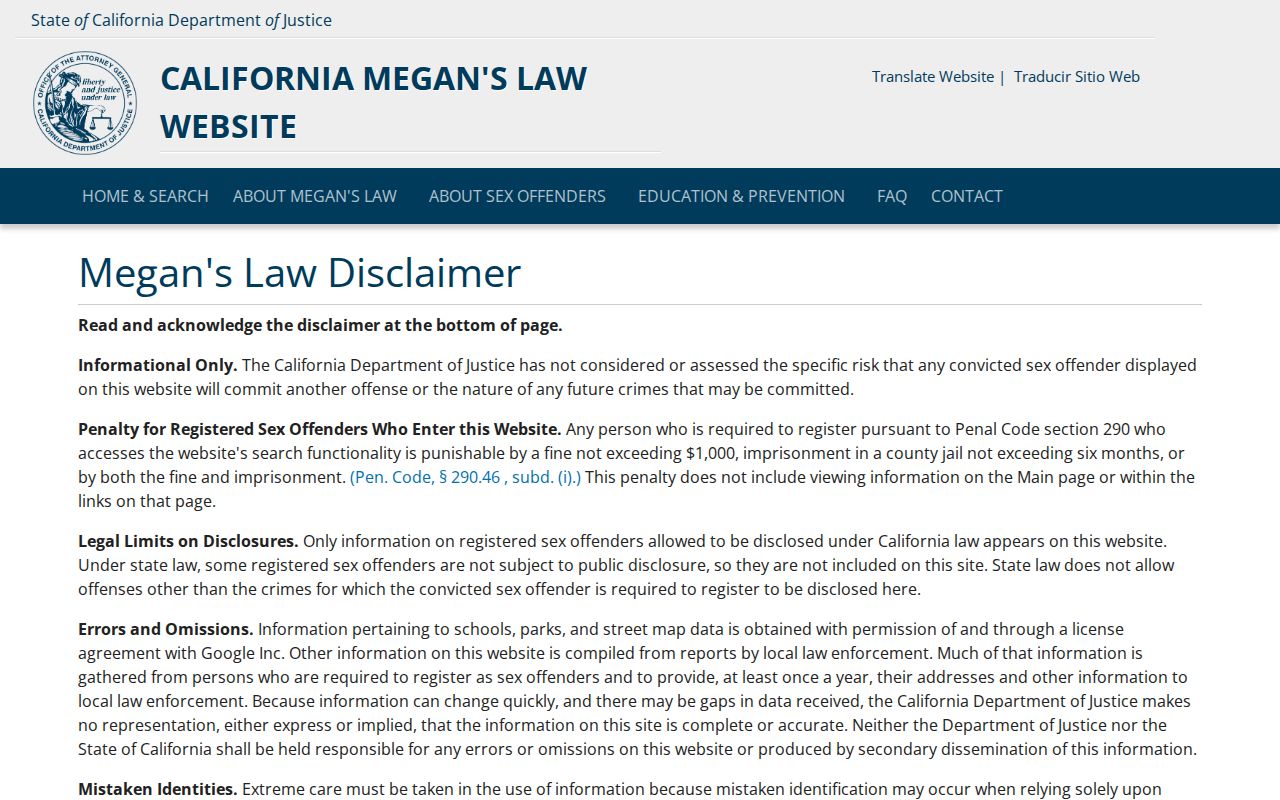
These images illustrate why a resident lookup must identify the agency, jurisdiction, and record category before interpreting a name.
The California Department of Justice record-review route is for an individual’s own official state criminal-history review, not a public person search.
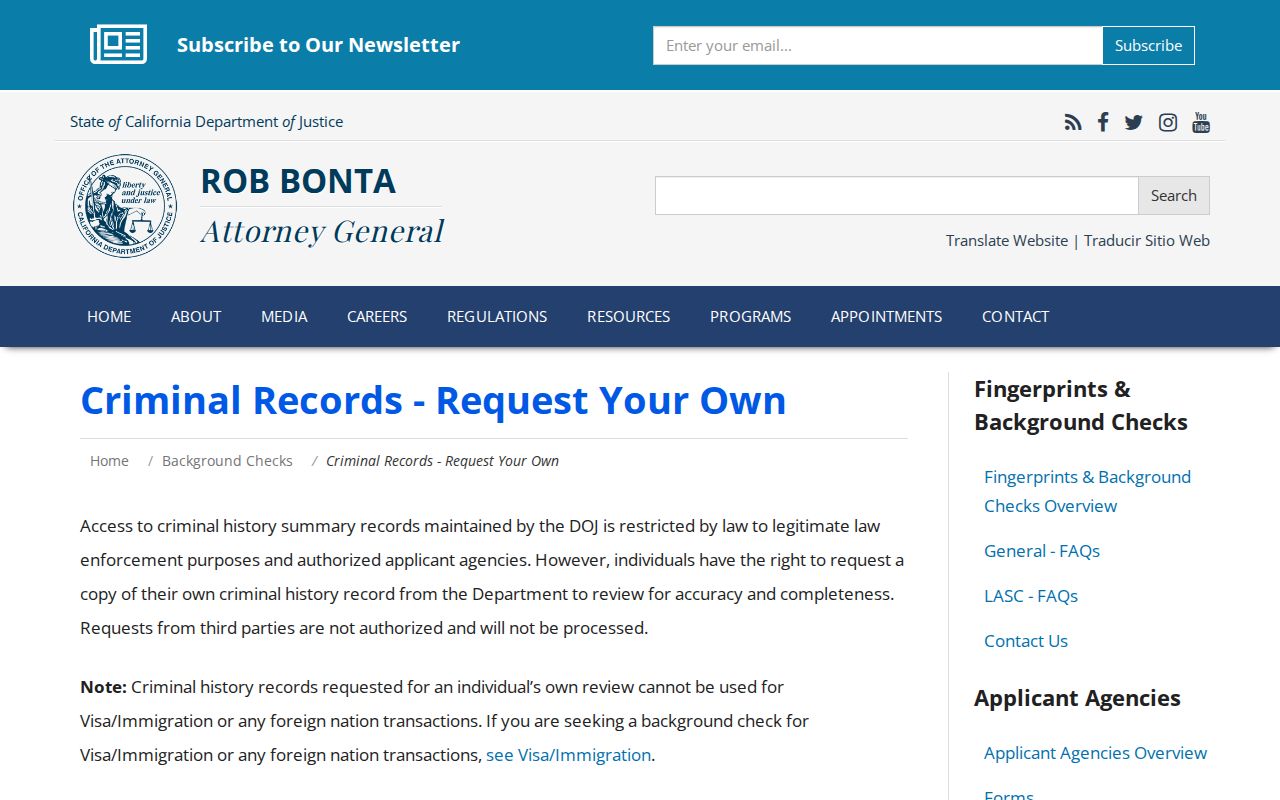
A fingerprint-based review has a defined requester and purpose, so it should not be mixed with the public court index.
Check Lathrop Business and Property Leads
California bizfile Online can show an entity’s legal name, number, status, formation jurisdiction, principal or mailing address, agent, Statements of Information, and filing history. DCA License Search can use a board, license type, license number, business name, first or last name, city, county, or ZIP. County FBN records add fictitious business names. These sources clarify a role or address in a public filing.
The Controller’s unclaimed-property search can return a reported owner and property summary from a last name, entity, first name, city, or ZIP. A result is a stale lead, not current residence. A claim requires proof. Search and claim instructions are free, so an upfront fee demand is a warning sign.
Use the role shown. An agent for service is not automatically an owner. A business address is not automatically a home. A license record proves a credential and public contact information, not current occupancy.
My Voter Status Is Not a Directory
California My Voter Status asks a registrant for first name, last name, date of birth, and a California driver license or identification number or the last four digits of a Social Security number when needed. The result is a private status, polling, ballot, or district check. It does not provide a public list of Lathrop voters.
Voter-file access is limited to political, election, scholarly, journalistic, or governmental purposes under Elections Code section 2194 and related regulations. Signatures, Social Security numbers, and driver or state-ID fields are withheld. Safe at Home can provide confidential voter registration and a substitute mailing address for eligible people who face safety risks.
When a resident lookup has no voter result, treat the absence as a privacy boundary. Do not infer that a person is not in Lathrop.
Legal Limits on a Lathrop Resident Lookup
California’s Public Records Act does not open every record and does not require a city or county to create a new list. Courts protect sealed, juvenile, adoption, victim, and other confidential matters. Vital records distinguish authorized from informational copies. Assessor owner information follows a permitted noninternet route. Voter records have specific statutory uses. These boundaries are part of an accurate answer.
Use records for family history, estate and heir work, property history, reconnection, and civic research. Verify a wrong record with the office that owns it. For a city record, use Lathrop’s CPRA form, email, or postal request. For a deed, contact the Recorder. For a court file, use Records Management. For a state license or vital record, use that state custodian.
When the sources do not resolve the identity, leave the result unresolved. Precision is more useful than a confident match built from a single name.