
Start a Lathrop Resident Search
A useful Lathrop resident search begins with the kind of proof the question needs. A current parcel record can show a legal owner or tax mailing destination, but it does not prove who sleeps at the address. A deed can show parties to a transfer, while a court docket can show a party role. A directory or newspaper can place a household at an earlier date. The first task is to label the result correctly before treating it as a lead.
Stockton is the San Joaquin County seat, so much durable Lathrop evidence sits outside the city. The city keeps permits, planning material, council records, and its own public-record request route. The county keeps the Recorder, Assessor, Clerk, tax, and court trails. California adds vital-record, voter-status, license, custody, and archive systems. Start with the narrowest trail and move outward when it ends.
- Write down the name, address, date span, and spelling exactly as known. Keep compound surnames, maiden names, initials, and suffixes.
- Use San Joaquin GIS or the Assessor address tools to turn a street clue into an APN and situs address.
- Check the Recorder Grantor/Grantee index, court case search, or LCAP based on the question, and note each person’s role.
- Use the library, obituary index, census schedules, and regional directories when the question reaches into the past.
- Ask the custodian for a counter view, copy, mail request, or focused CPRA search when the online index stops.
The strongest result is a short chain with dates and source names. It says what was found, where it was found, and what remains unproved.
Where Lathrop Resident Records Live
The central county desk is the San Joaquin County Assessor-Recorder-County Clerk in Stockton. The Recorder indexes instruments, the Assessor maintains parcel and assessment information, and the County Clerk handles series such as marriage licenses and fictitious business names. The Superior Court keeps case files. Lathrop’s City Clerk and City Attorney route city-held records, while Cesar Chavez Central Library holds the strongest local-history and genealogy shelf.
These offices are not interchangeable. A tax mailing address is not an occupancy roll. A court party is not automatically a resident. A library obituary lead is not a certified death record. Use the office cards as starting points, then follow the access rule for the record itself.
San Joaquin Recorder
44 N. San Joaquin Street, Suite 260
Stockton, CA 95202
(209) 468-3939
San Joaquin Assessor
44 N. San Joaquin Street, Suite 230
Stockton, CA 95202
(209) 468-2630
San Joaquin Superior Court
Stockton case and records services
Public index and view room
Records guidance online
San Joaquin Deeds Behind Lathrop Names
The Recorder describes 168 recorded-document types dating to 1851. The online Grantor/Grantee index reaches January 1, 1968 through the present, while earlier documents are available through office digital or film holdings. A grantor conveys or encumbers an interest. A grantee receives or benefits from it. Searching both roles matters when a former owner becomes the next seller.
The index is a finding aid, not the whole legal instrument. An entry can show the parties, recording number, recording date, book and page when applicable, and document type. The image or certified copy supplies the legal description and the terms. Protected information may be redacted under California law, and military discharge records have special limits.
| Recorder field | What to enter | Why it helps |
|---|---|---|
| Grantor or grantee | Choose one role, then repeat in the other | Finds each side of a transfer |
| Last or business name | Indexed spelling and entity name | Preserves the filed form |
| Recording dates | Beginning and ending range | Narrows common names |
| Document type | Deed, release, lien, map, decree, or other type | Separates ownership from encumbrance |
| Document number or book/page | Known citation | Retrieves a direct hit |
For a resident-directory question, the deed trail is evidence of a party’s link to land at a recorded event. It should be paired with a parcel, date, permit, obituary, or other independent record.
Lathrop Parcel Clues from the Assessor
San Joaquin’s property information system is useful for moving from a street clue to a parcel. Search by APN or situs address, or use a map selection when the address does not normalize. The county does not publish owner names through its internet property roll because California law restricts that display. A lawful searcher must use the public counter, terminal, phone route, or an available copy and data process for ownership information.
The distinction protects accuracy as much as privacy. The APN is an Assessor parcel identifier and can change after a split or merge. The situs address is the physical property label. A mailing address is the tax or contact destination. The legal description in a deed is the durable land identity. None of these labels alone establishes every current occupant.
- Roll
- An assessment record for parcels, values, characteristics, and ownership information held by the Assessor.
- Index
- A searchable finding aid that points to a fuller deed, case, map, or other record.
- Criss-cross directory
- An address-ordered volume that can point from a street to a listed subscriber for a publication year.
- APN
- The Assessor’s parcel identifier used to join a map, tax record, and deed research trail.
- Situs address
- The county’s physical property address, which can differ from a tax mailing address.
- Parcel
- A mapped unit of land, not a list of everyone who lives within it.
The July 2024 fee sheet lists small charges for screen copies, building-record copies, and parcel maps, along with larger charges for certain characteristics and data products. Because fees can change, confirm the current schedule with the Assessor before ordering.
San Joaquin County GIS adds map context. Its address and APN tools, identify control, parcel layers, boundaries, and optional thematic layers can show adjacent lots. The map is a bridge to the parcel, not a substitute for the custodian’s ownership record.
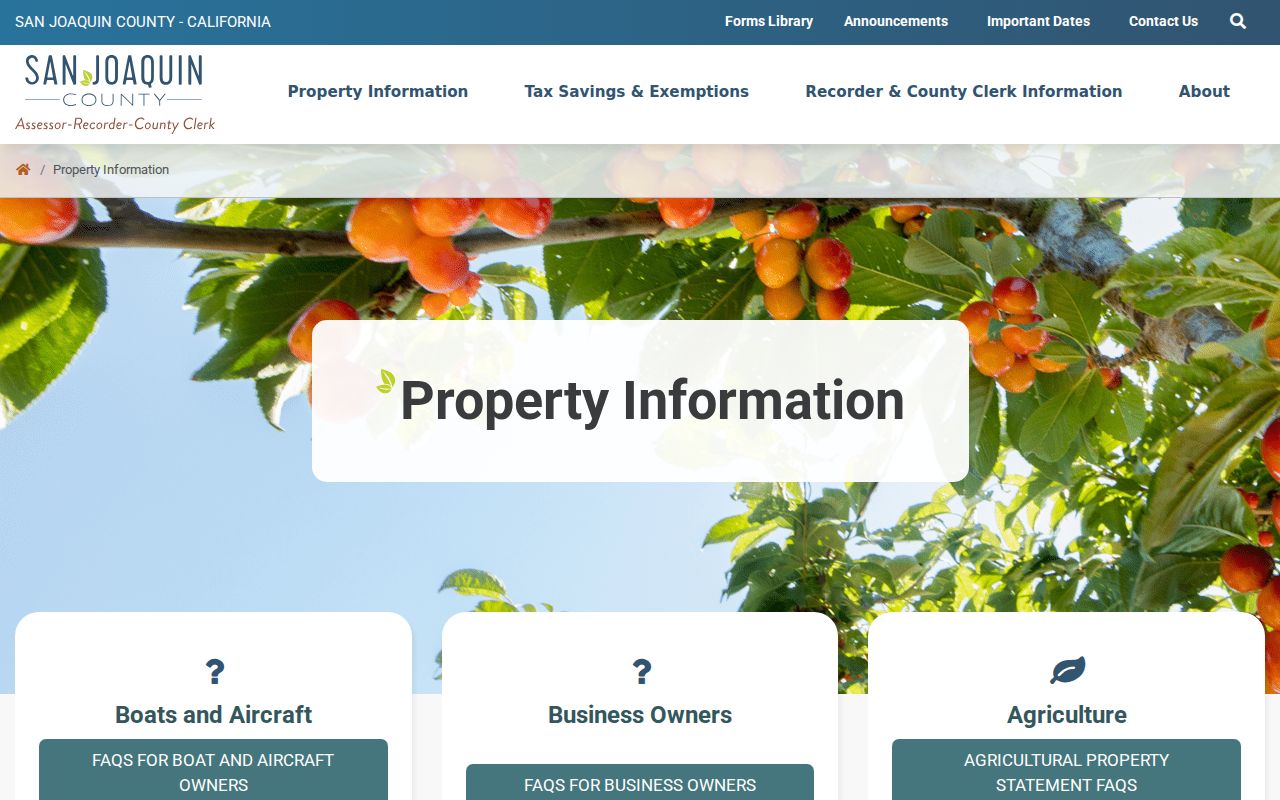
The San Joaquin Assessor property-information gateway shows why an online address lead sometimes ends at a counter. The screenshot below captures the starting point for a Lathrop parcel search.
Use the returned parcel and address to guide the Recorder or a focused records request. Do not turn a map match into a claim about a household without a second source.
Lathrop Permits Since May 7, 1997
Lathrop’s Civic Access Portal, or LCAP, brings building permits, business licensing, planning applications, payments, and inspections into one city system. Its public permit history begins May 7, 1997. Address searches can expose a project description, inspection history, status, and an applicant, owner, or contractor connection. That connection is evidence about work at an address, not proof of residence.
The public-search path is worth trying before a CPRA request. Plans and a complete permit history are not simply available for download through the guidance page. Ask the City Attorney for defined records through the online form, email, or postal mail. The city says it will make an initial determination within ten days under Government Code section 7922.535, but that is not a promise that production finishes in ten days.
| Address or location | Use the street number and street name when the address route is available. |
|---|---|
| Record or permit number | Enter a known number to narrow the result. |
| Record type | Choose a building permit, business license, planning, or application category when exposed. |
| Date or status | Use the filter when the public screen makes it available. |
| Search and reset | Run the query, then clear it before testing a second address. |
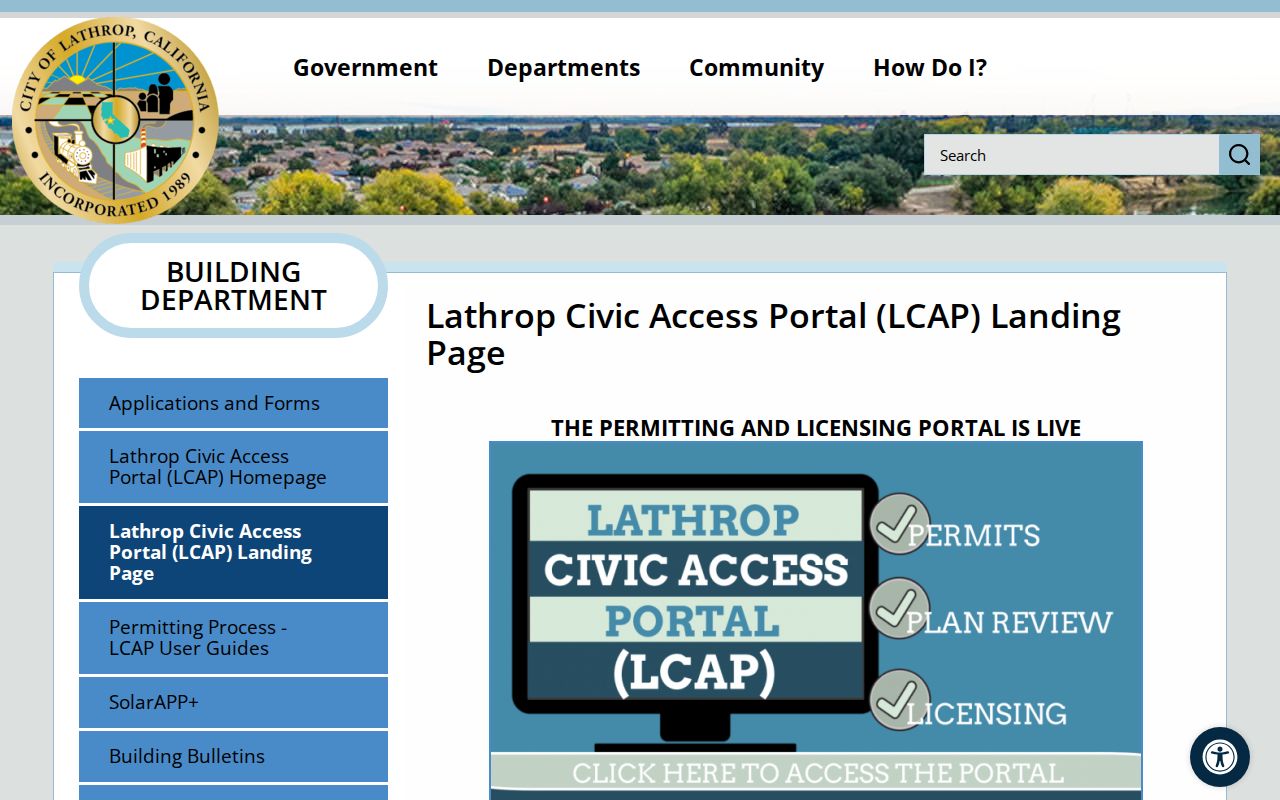
The Lathrop Civic Access Portal landing page is the city gateway. The research image below highlights the portal route that can add dates and project context to a Lathrop residents directory trail.
Use a CPRA request for a specific plan, inspection record, or date range. A focused request is more useful than asking the city to create a list it does not already keep.
Today's Lathrop Resident Directory Sources
Modern Lathrop resident-directory work is a comparison of record types. Each row below answers a different question, and several are not public lists at all. The table keeps an owner, a registrant, a court party, a city participant, and a historical name from being blended into one unsupported identity.
| Source | Who or what it shows | Keeper | Access |
|---|---|---|---|
| Parcel and assessment roll | APN, situs, mailing and property facts | San Joaquin Assessor | Web parcel clues, counter, phone |
| Grantor/Grantee index | Parties to recorded deeds and liens | San Joaquin Recorder | Web index, counter, copy request |
| LCAP permit history | Applicants, contractors, projects, inspections | City of Lathrop | Online from May 7, 1997 |
| Case Management Search | Public party and docket events | San Joaquin Superior Court | Free index, file by kiosk or request |
| Business and license profiles | Entity, agent, credential, or public contact | California and county offices | Public portals, role limits apply |
| Library and newspaper collections | Past households, notices, obituaries | SSJCPL and regional archives | Microfilm, books, index, staff help |
A voter-status result is not a seventh row in a public list. California’s My Voter Status tool is for a person to check that person’s own registration, ballot, polling place, and district information. The election file is restricted under Elections Code section 2194 and related regulations. The California My Voter Status tool should never be treated as a street or ZIP directory.
California Voter Lookup Is Personal
The voter-status form asks for a first name, last name, date of birth, and a California driver license or identification number or the last four digits of a Social Security number when needed. Those fields verify a registrant privately. They do not return an open neighborhood roster, and the sensitive fields are not part of an authorized public extract.
For a Lathrop resident lookup, use the tool only for the person whose registration is being checked, or use the San Joaquin Registrar of Voters for an authorized election, scholarly, journalistic, political, or governmental purpose. A name on a deed, license, or court docket should not be presented as voter confirmation. This is a useful place to stop an otherwise tempting but unsupported inference.
California’s Safe at Home program also means a protected participant may use a substitute mailing address and confidential voter registration. A missing name or address can reflect a safety program rather than an empty record trail.
The San Joaquin Registrar of Voters explains the county election channel. It is the proper place to ask about an authorized records purpose, not a shortcut to a public residents directory.
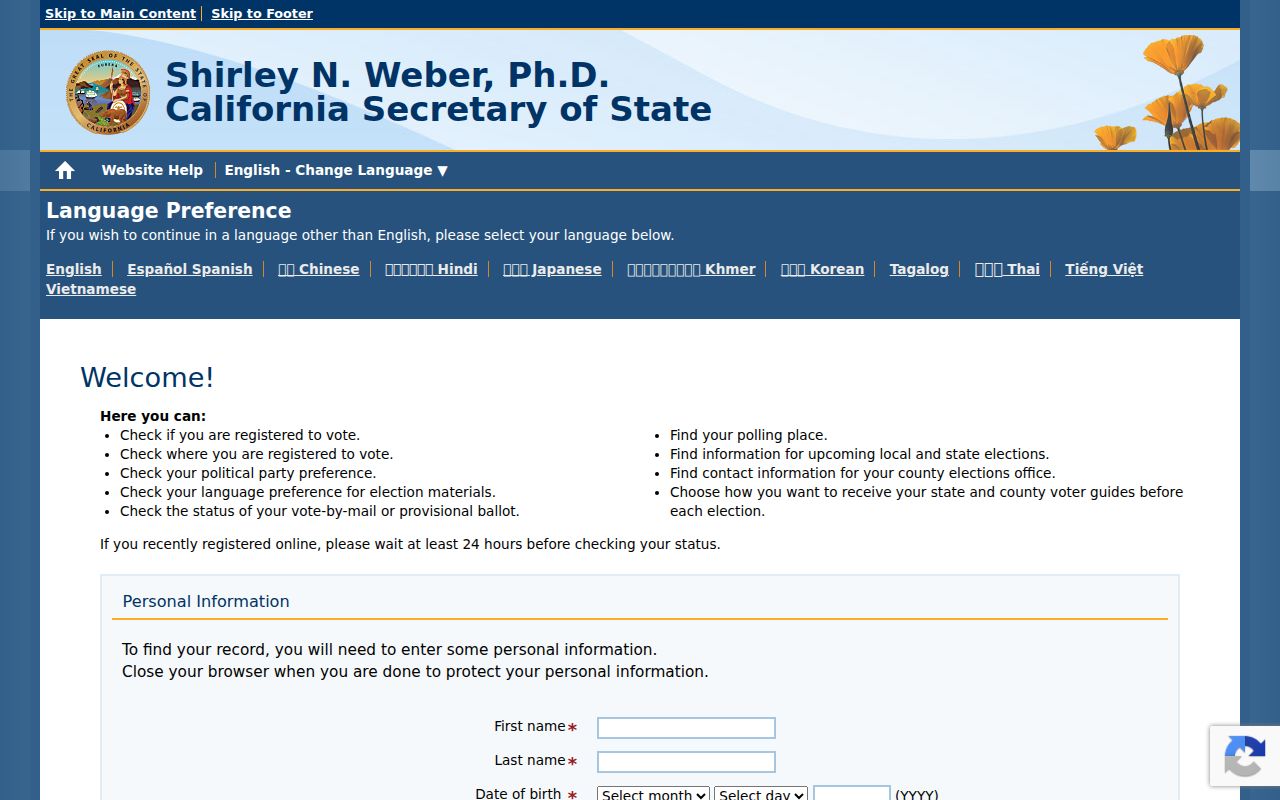
The personal verification fields shown here are why a private status check and a public resident search must stay separate.
San Joaquin Court Names and Roles
San Joaquin Superior Court’s Case Management Search can locate public docket information for civil, criminal, family, probate, small claims, traffic, and other case categories as the portal exposes them. Search by case number when known. In name mode, enter first, middle, and last name combinations separately, then test spelling variants and a middle initial. California Rule of Court 2.507 keeps date of birth and driver-license data out of remote public party searching.
A docket is a court’s event record. It may show a party name and role, case number, court division, filing date, hearing dates, register-of-actions entries, and a public disposition or status. It is not the full file. Sealed cases, juvenile matters, confidential adoption material, protected victim information, and other confidential records stay out of the public result.
- Use the free San Joaquin Case Management Search for the first index check.
- Use Stockton’s second-floor view room kiosk for public file viewing by appointment or walk-in.
- Use Records Management when a file, certified copy, or uncertified copy is needed.
- Use the CR-109 mail form for a copy request that has the case number and advance payment.
Records Management says online requesters need the case number and a valid email. Staff generally contact the requester within 24 to 48 hours to arrange viewing. Mail-copy requests can take about 20 business days depending on volume, and copies are not sent by email. Copy fees and certification fees apply, with a separate amount for a certified divorce judgment.
A court party is a litigation role, not a finding that the person lives in Lathrop or that an allegation is true. Check the case type, date, courthouse, counsel, and linked filing before connecting it to a resident.
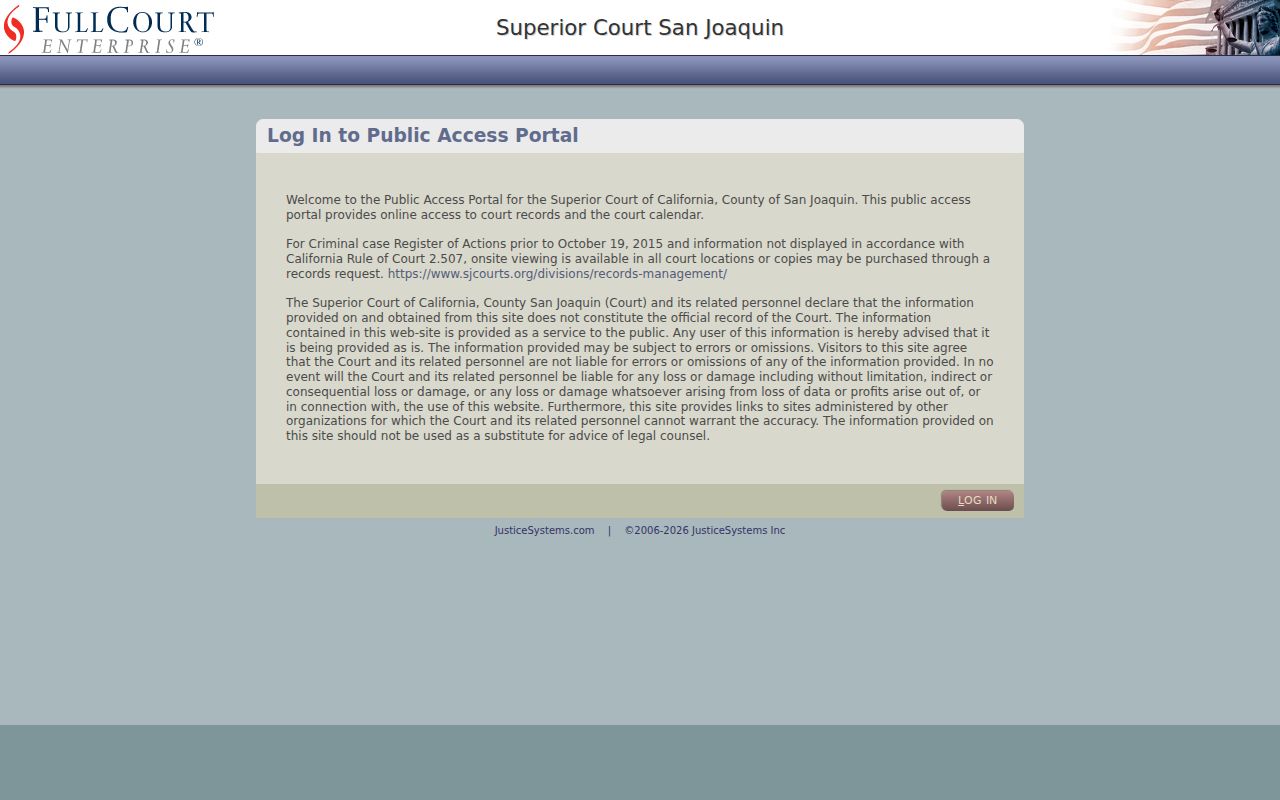
The court search interface provides the public starting point. Its image below is one official court trail for a Lathrop name.
When the index gives a case number, take that number to Records Management instead of treating a search result as a complete record.
Lathrop Birth Death and Marriage Records
California vital records use an authorized-copy and informational-copy system rather than one simple public opening date. San Joaquin County’s Recorder-County Clerk handles local birth, death, and marriage channels. The California Department of Public Health provides a statewide route and divorce verifications. An authorized certified copy is limited to listed eligible people and may require a sworn statement. An informational copy carries a legend and is not the same proof.
Confidential marriage records have a tighter rule under Family Code section 509. Public marriage, death, or birth indexes found through a library or genealogy collection can point to an event, but the custodian controls the application, identity proof, copy type, and current fee. Adoption information also follows a separate state pathway.
| Birth | San Joaquin Recorder or CDPH; copy eligibility depends on authorized or informational status. |
|---|---|
| Death | County or CDPH; a library death index can lead to the record but is not the certificate. |
| Public marriage | County Clerk or CDPH channels, with access depending on applicant and record type. |
| Confidential marriage | Generally limited to a spouse or court order through the county clerk of issuance. |
| Divorce | Superior Court holds the file and judgment; CDPH supplies limited verification. |
The California Vital Records page links to the state ordering route. The application image below belongs with the copy-choice explanation.
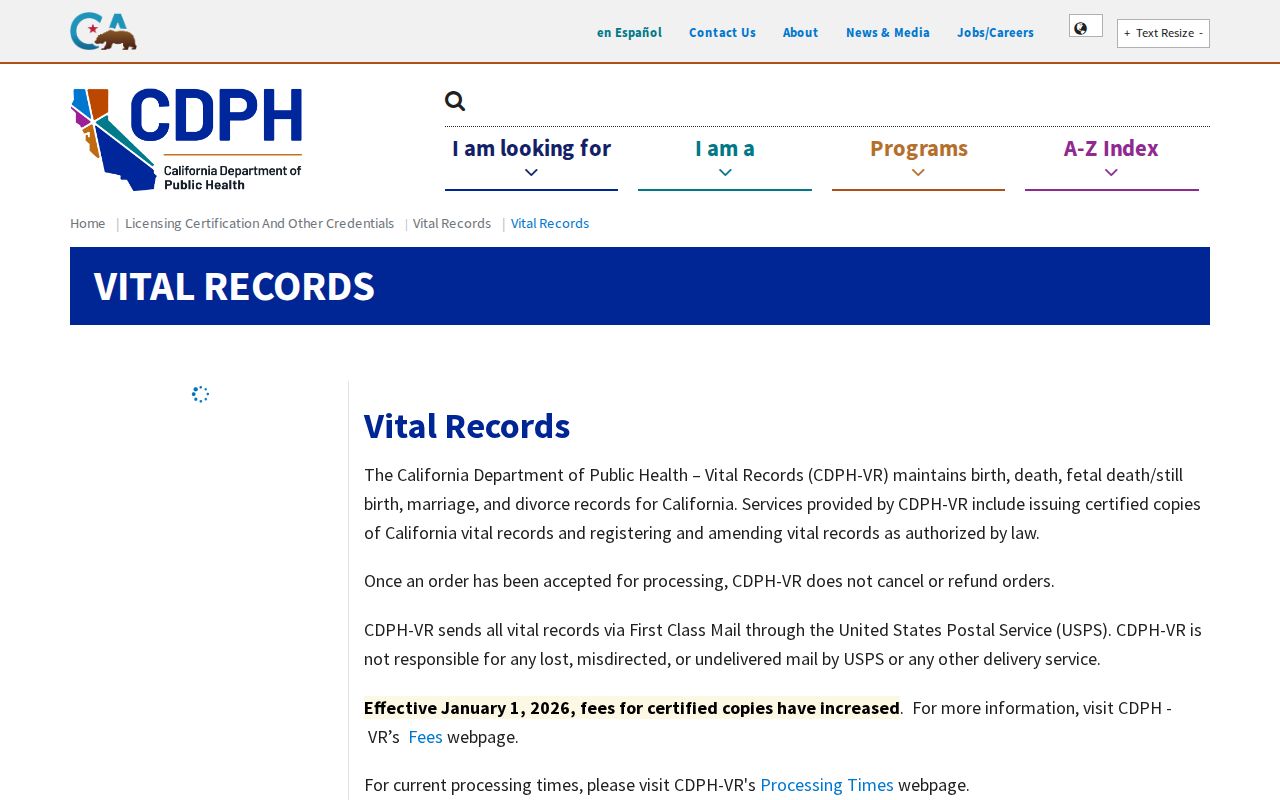
For family history, record the event date and place first. Then ask the county or state for the copy that the requester is legally allowed to receive.
Stockton Library Sources for Lathrop Families
Cesar Chavez Central Library in Stockton is the main regional shelf for Lathrop family research. Its upper-level reference collection includes more than 1,500 genealogy books, about 200 family histories, 125 periodicals, and San Joaquin vital and cemetery compilations. Much of it is noncirculating and must be used in the building. Family History Helpers meet on the first and last Tuesday from 10:30 a.m. to 1 p.m.
Newspaper microfilm is especially useful. The library holds Stockton-area papers since 1850, described as “just about” all issues, but the subject index is incomplete. A researcher can view, print, email, or save an image to USB. HeritageHub and Ancestry Library Edition add databases, with Ancestry access limited to the library. The local obituary index covers 1850 through 1991.
The SSJCPL genealogy collection and the Chavez local-history room offer a human route when an online name search misses a year. The San Joaquin Genealogical Society accepts requests at research@sjgensoc.org and charges $5 to locate a county obituary. Give a date window, surname, place, and likely newspaper so the volunteer can test the right shelf.
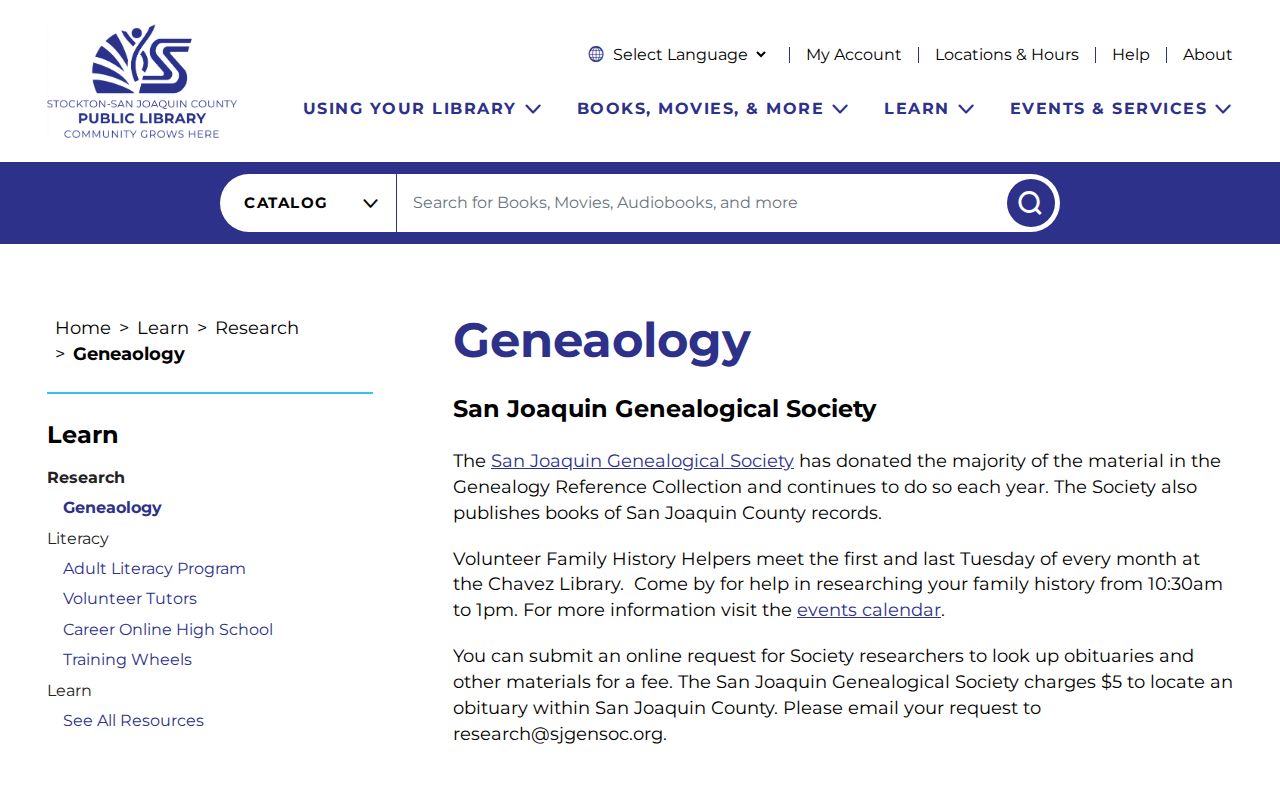
This library path can connect a former Lathrop household to an obituary, family history, school notice, or newspaper item without claiming that every name in print was a current resident.
San Joaquin Custody Searches Are Separate
Some official public searches concern custody or registration status rather than ordinary residents directory work. San Joaquin County Sheriff’s Who’s in Custody search is a county-jail tool. The California Department of Corrections and Rehabilitation locator covers state-prison records, not county custody. California Megan’s Law has its own public-safety search and warning. A result can change, a charge is an allegation until adjudicated, and statutory use limits apply.
Use the county jail search when the question concerns present county custody. Use the state locator for a CDCR number or state-prison record. Use the state registry only for the public-safety purpose stated by its rules. These separate scopes keep a temporary custody result from becoming a claim about a person’s home or family.
The San Joaquin Who’s in Custody search is the county channel captured for the Lathrop research set.
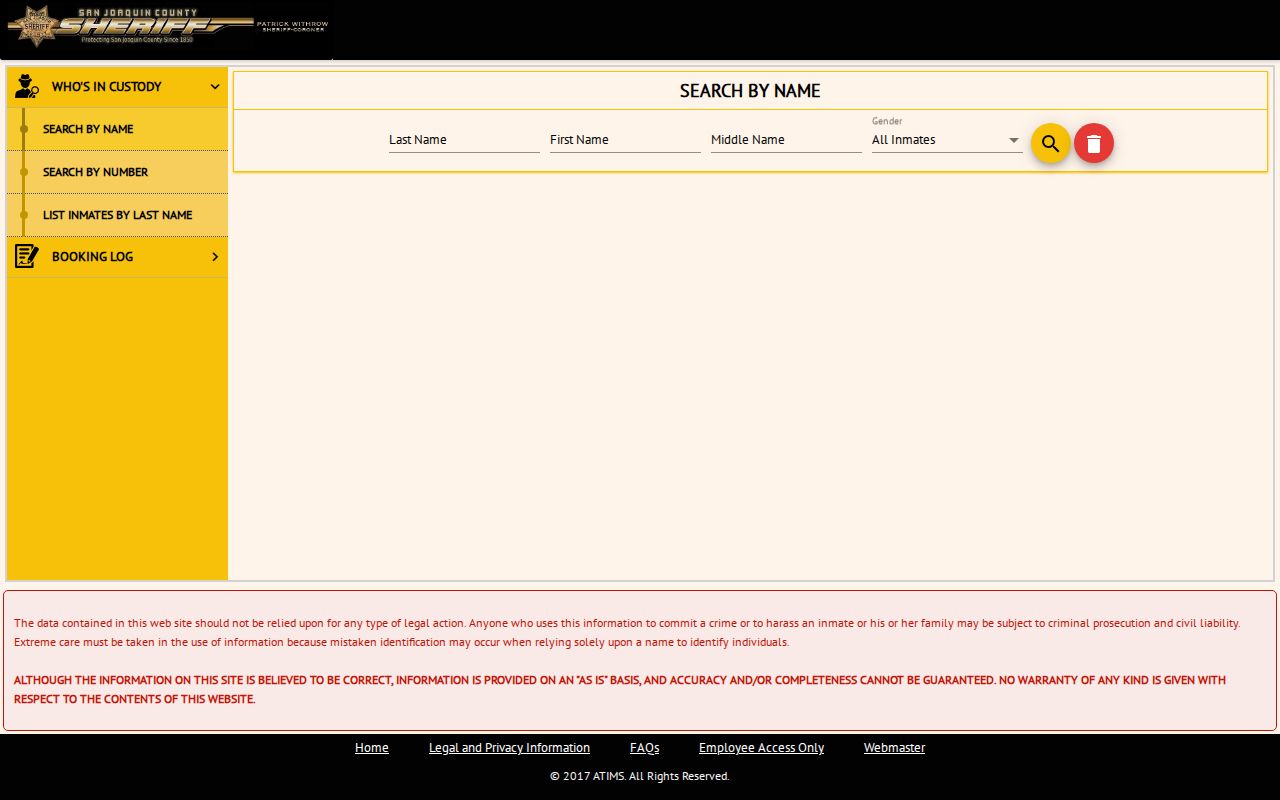
Read the scope and disclaimer on the official result before saving a name. A lookup category is not a general resident roll.
Lathrop Business and License Trails
Business and professional records can help explain a public role, a filed address, or a company connection. California bizfile Online searches entity names and numbers and can show status, formation jurisdiction, agents, addresses, Statements of Information, and filing history. The Department of Consumer Affairs search can use a board, license type, license number, business name, first and last name, city, county, or ZIP. Contractor, attorney, and real-estate searches have their own official portals.
LCAP handles Lathrop city business-license and application records. The County Clerk handles fictitious business names. An agent for service of process is not necessarily an owner or resident. A public license contact can be a business or mailing address. Record the role exactly, then seek a separate parcel, court, obituary, or family source if the question is about a person.
The California bizfile Online search is one official starting point for a Lathrop business lead.
Business filings add context to a residents directory, but they should never be read as a household list.
When Lathrop Records Need a Counter
Online access is only one channel in the Lathrop records map. The Assessor’s owner-name restriction makes the counter or public terminal important. Recorder images and certified copies follow a fee schedule. Court files may require the Stockton view room, a case number, email, mail form, advance payment, and a wait. Library material may be noncirculating. City plans may need a focused CPRA request. A complete resident search names these fallbacks instead of promising that every answer is online.
| Need | Online start | Fallback channel |
|---|---|---|
| Parcel and owner clue | Assessor property information or GIS | Assessor counter, terminal, phone, or copy request |
| Deed or lien | Recorder Grantor/Grantee index | Recorder counter, image, certified copy, or mail request |
| City permit or plan | LCAP from May 7, 1997 | Lathrop CPRA web, email, or postal request |
| Court file | Case Management Search | Stockton kiosk, Records Management, or CR-109 |
| Old family clue | Library catalog or obituary index | Chavez room, microfilm, volunteer, or archive appointment |
Official records and commercial people-finder pages also differ in what they prove. The comparison is about source quality, not a recommendation of any named service.
| Source category | Strength | Limit |
|---|---|---|
| Government record | Named custodian, defined series, dates, and legal access rule | May omit occupants, be restricted, or require a fee |
| Library or archive | Older context, local help, newspapers, books, and directories | Coverage can be incomplete and in-person |
| Commercial people-finder category | May join public and purchased data in one interface | Source dates and role labels can be unclear; verify at the custodian |
For a serious Lathrop question, the official source should remain the last word. The Recorder office page is a safer place to confirm the official copy route than a mailed solicitation.
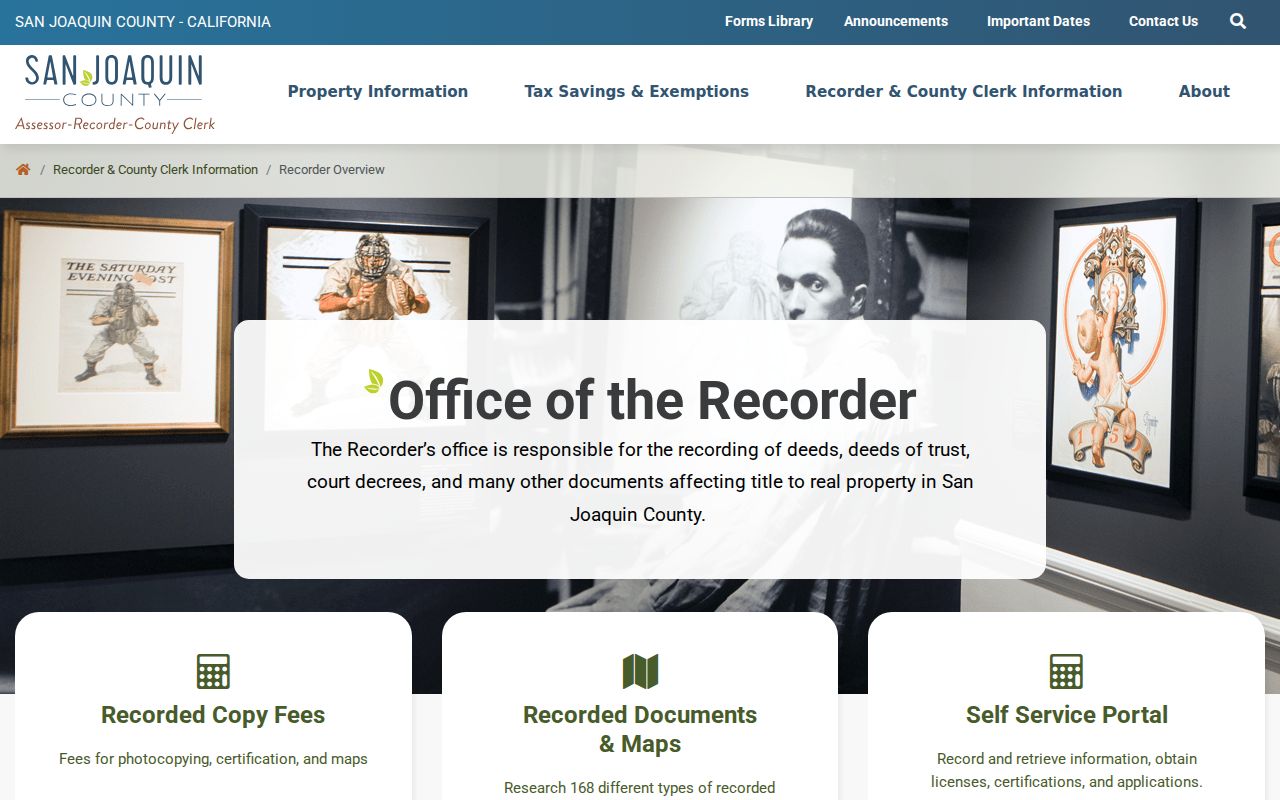
The county counter is not a failure of the Lathrop residents directory. It is part of the documented access path.
Older Lathrop Directory Collections
Historical Lathrop resident directories are regional rather than neatly city-only. The San Joaquin Historical Museum describes city and county directory holdings from 1852 through 1980, with gaps not listed and access by appointment. The library’s local-history policy includes city and county directories, telephone books, and yearbooks. The exact Lathrop run still needs shelf verification. Ask for Lathrop, Stockton, San Joaquin County, Manteca, rural-route, railroad, and postal catalog terms.
A 1878 D. H. Berdine statistical county and Stockton directory is digitized through the Internet Archive and contains Lathrop entries. Haines North San Joaquin Valley criss-cross volumes run from about 1932 onward, with a 2010 holding confirmed at the SSJCPL Ripon reference collection; Lathrop coverage must be checked. A criss-cross directory changes the direction from person-to-address to address-to-listed subscriber.
The fuller historical-shelf treatment belongs on the Lathrop city directories page. For a current address chain, use parcel and deed records first, then use a directory year to test whether a named household appears at that address.
Lathrop’s 1989 Records Boundary
Lathrop’s incorporation after the 1989 election is a catalog boundary. Before incorporation, a request for “City of Lathrop” may miss records held under unincorporated San Joaquin County, Wilson’s Station, a railroad or postal term, a school, a church, or a newspaper. Lathrop began around Central Pacific construction, became a rail stop by 1871, and had about 600 residents by 1879. A major 1911 fire and later industry shaped the local story, but the research does not establish a destroyed records series.
The city’s 1990 planning area reached west to the San Joaquin River and north to Roth Road. A January 1991 expansion added nearly 5,000 acres of the Stewart Tract west of the river. River Islands, Mossdale, Central Lathrop, and older rail-corridor terms can therefore point to different record custodians and dates. The 2020 census counted 28,701 residents, while newer growth is better traced through parcel, permit, newspaper, and city records than the last public 1950 census schedules.
California’s 2026 DROP platform gives consumers a state route for requests directed to registered data brokers. It does not delete deeds, court files, or other source-government records. The most careful Lathrop residents directory workflow keeps history, current parcel evidence, personal verification, and privacy limits in separate lanes.